Here’s a little story that I lived recently, and it’s something of a cover reveal for Avalon Moon as well.
Back yonder in the days of COVID, I ran across a Facebook group called “Dark Sire,” which was, as I recall (and as I understood it), connected to a publishing venture devoted to the Gothic, as that term is variously defined.
During the period that Dark Sire was active and I was following along, an artist named Shaun Power regularly posted electronic images of his paintings. (You can check out his work on Instagram at @shaunpower90.) I loved pretty much everything he posted and communicated with him a bit via comments on this piece or that. He was always both generous and appreciative in his responses. His work was most often dark (but rarely monstrous or terrifying) and randomly whimsical. No matter what he posted, far more often than not it resonated with me in some way.
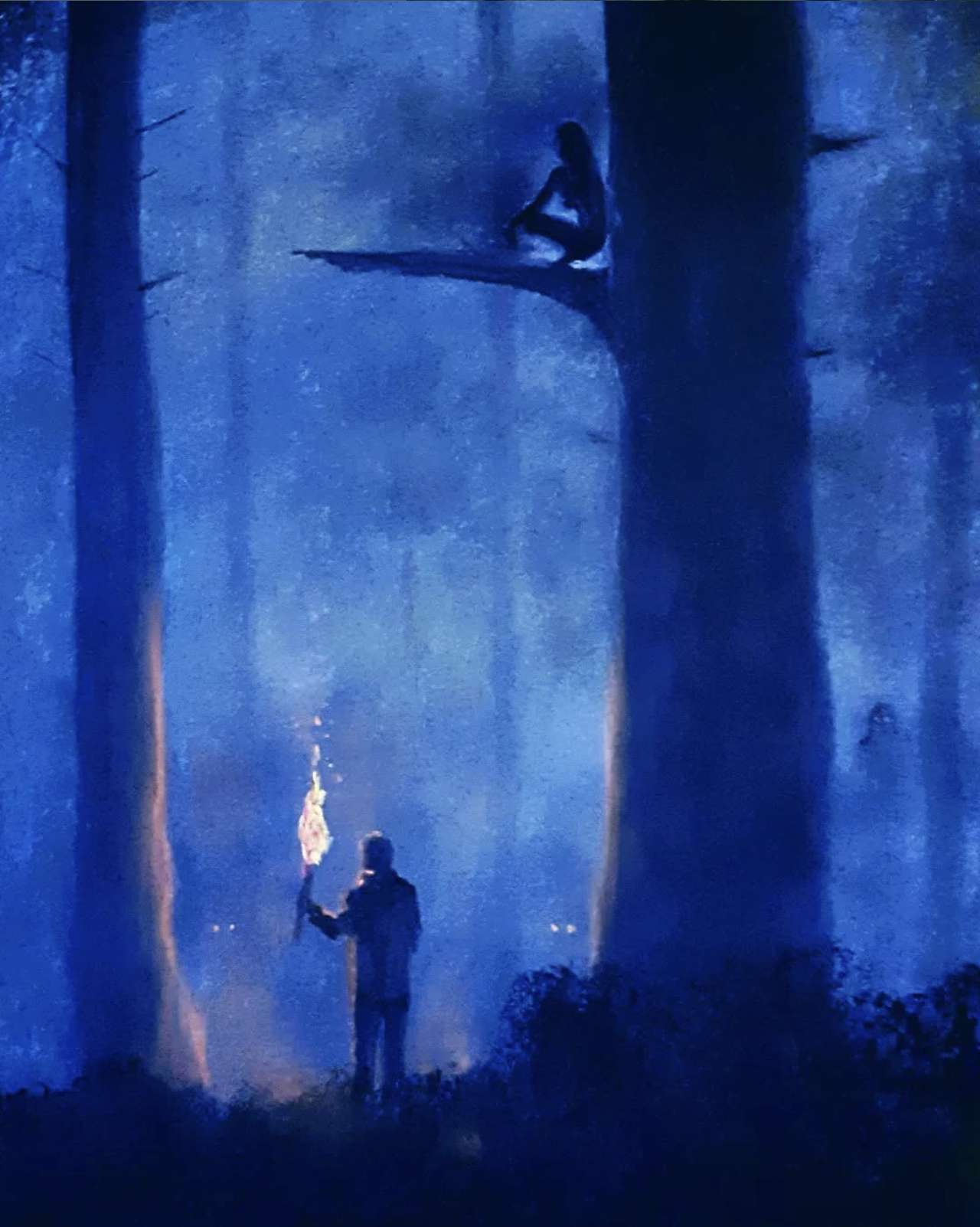
One particular painting appeared in a couple of variations and with a few different names. Here’s the version of it that spoke to me the most:
I don’t remember what title this initially appeared under, but I was immediately taken with it – particular shades of blue that are my favorites, the lonely man with the torch (maybe the torch representing desire, as in “carrying the torch” for somebody or something), the eyes of beasts glowing in the darkness, the human beast that haunts the right side of the image, the haunting silhouette of a woman on the broken branch above the lonely man (possibly what he’s looking for with that torch).
At the time I ran across Shaun’s post of this image, I was somewhere early in the process of drafting Avalon Moon. One character physically absent from the story but still a strong presence is named Kayla Logan Reeves. She’s a painter and an elementary school art teacher. Even though she has disappeared by the time the Avalon Moon story begins, I imagined this as the final canvas she worked on. (You can read about Kayla in her younger days in “Jamboree” and/or listen to the same via her song “Jamboree,” which came before the story.)
Anyway, I was so taken with Shaun Power’s painting that I wrote it into my novel as Kayla’s painting (with a couple of story-related adaptations).
Flash forward to fall 2025 when Madville Publishing emailed to ask if I had any ideas for the cover. I sent a handful of images, one of which was Shaun’s. It’s the one I wanted, and it turned out to be the one Madville liked.
We needed Shaun Power’s permission to use his artwork for my novel’s cover, so I immediately set out (virtually) to track him down. After only a few minutes I learned, sadly, that Shaun had walked on from this world in summer 2024. He was basically the same age I am, only a year or so older, so to learn of his death was made more heartbreaking in that he was so young – as I define young from this vantage point of being sixty-seven years old.
After sitting with that loss for a few minutes, I started looking again, hoping to find next of kin who might be interested in granting permission to use the image. I found his wife, now widowed, and his son, both of whom had points of contact but neither of whom seemed to have a very active online life. I wrote a note to each of them, expressing my condolences for their loss and letting them know of my interest in using one of Shaun’s paintings for my book cover. Given their low-level online activity, I didn’t expect to hear back from either.
But I think it was less that thirty minutes before his son got in touch with me and said that he and his mum thought Shaun would love having his work appear on the cover of Avalon Moon, work he was proud to have shared with Dark Sire. Because Shaun published this image under a couple of different titles, his wife and son asked that we credit it as “Shaun’s Strange Land,” which is a variation of one title he gave it.
I can hardly wait to hold the book in my hands and for others to do so as well – those others include the family and friends of the late great Shaun Power.
Sometime in early November 2024, I locked my metaphorical doors and windows, closed the blinds, and more or less abandoned the seriocomic world at large. Bad comedians took the stage (“All the world’s a stage”), their third-rate stand-up routine bumbling through a gag bit “full of sound and fury / Signifying nothing.” Shakespeare aside, I buried my head not in the sand but in teaching and writing and reading.
Teaching: In Spring 2025, I taught a large section of ENGL 2110: American Literature to 1865, my first section of ENGL 3142: Creative Writing I (Fiction), an online section of ENGL 3280: Mythology, and ENGL 5450: Colonial & Federal Literature (a graduate course in early American literature). In Fall 2025, I taught ENGL 3070: Native American Literature (with a focus on Indigenous crime fiction), ENGL 3142: Creative Writing I (Fiction), and an online section of ENGL 3280: Mythology.
Writing: With a little help from my friends, I laid the groundwork for the April 15 release of Streets of Nashville, which was a finalist for Best Thriller of the year according to BestThrillers.com, worked through the final edits of Avalon Moon (to be published by Madville Publishing in May 2026), and drafted the first half of a novel I’m calling Jacob’s Limp, a sequel to Streets of Nashville. I also wrote a short story titled “Brownies at the Chateau LeMoyne.”
Reading: I read a lot via both eyes (mostly hard copy but some electronic texts) and ears (Audible, Libro.fm, Spotify). Here’s a list, structured from January through December 2025:
“The Dead” by James Joyce (technically a short story) Turkeyfoot by Rick Childers Iron Lake by William Kent Krueger Exposure by Ramona Emerson Let Us Descend by Jesmyn Ward Those We Thought We Knew by David Joy Down the River Unto the Sea by Walter Mosley The Westside Park Murders by Keith Roysdon & Douglas Walker Notes on a Drowning by Anna Sharpe The Caretaker by Ron Rash Cahokia Jazz by Francis Spufford Genesis Road by Susan O’Dell Underwood The Wailing Wind by Tony Hillerman Hunting Badger by Tony Hillerman Nowhere by Allison Gunn The Coquette by Hannah Webster Foster Smoke Kings by Jahmal Mayfield The Busker Wars by Whiskey Leavins The Sinister Pig by Tony Hillerman Wieland by Charles Brockden Brown King Cal by Peter McDade The Daughter of Time by Josephine Tey The Reluctant Sheriff by Chris Offutt All the Pretty Girls by J.T. Ellison Dixie City Jam by James Lee Burke People of Darkness by Tony Hillerman The Last Songbird by Daniel Weizmann Served Cold by James L’Etoile Unsettling Truths by Mark Charles and Soong-Chan Rah Skeleton Man by Tony Hillerman A Séance for Wicked King Death by Coy Hall Last Chance for a Slow Dance by Mark D. Baumgartner That October by Keith Roysdon We Are All Together by Richard Fulco The Last King of California by Jordan Harper Traveling Alone by Katy Goforth The Buffalo Hunter Hunter by Stephen Graham Jones King of Ashes by S.A. Cosby Rednecks by Taylor Brown This House of Sky by Ivan Doig Rain Gods by James Lee Burke Master and Commander by Patrick O’Brian Songs by Honeybird by Peter McDade House Made of Dawn by N. Scott Momaday That Which Binds Us by Cathy Rigg Tonight in Jungleland by Peter Ames Carlin Winter Counts by David Heska Wanbli Weiden Avalon Moon by Michael Amos Cody Shutter by Ramona Emerson Boundary Waters by William Kent Krueger Mean Spirit by Linda Hogan Dead Man Blues by S.D. House The Witch’s Orchard by Archer Sullivan The Round House by Louise Erdrich The Devil’s Bed by William Kent Krueger Gray Dawn by Walter Mosley Bone Game by Louis Owens The House on Buzzard’s Bay by Dwyer Murphy A Rising Man by Abir Mukherjee Murder on the Red River by Marcie R. Rendon The Serpent King by Jeff Zentner Avalon Moon by Michael Amos Cody There There by Tommy Orange Killer Clown by Terry Sullivan with Peter T Maiken Nightshade by Michael Connelly Avalon Moon by Michael Amos Cody A Christmas Carol by Charles Dickens The Familiar Stranger by Tyler Staton
I’ve done more teaching, writing, and reading along the way–some concluded in 2025, some continuing into 2026. I’ll leave it at that for now and wish everybody, especially anybody who reaches the bottom of this post, a happy, healthy, and safe New Year.
P.S. Yes, I know that I read Avalon Moon three times, but . . . I read it three times!
A few people have asked me about the exact nature of the relationship between Ezra and Mel in Streets of Nashville. At least one has followed that question with this one: “Are they gay?”
I understand why some readers might ask. Ezra and Mel end their phone calls with “Love you, Ez” and “Love you, too” or vice versa. Main character Ezra thinks of Mel often and, once the danger of Hugo Rodgers breaks into his life, often longs to be home—and safe—with Mel in Runion. In addition to these examples, they’re comfortable expressing their love for each other physically. Early in the novel, after an evening of hanging out at the Runion Pizzeria, they take leave of each other this way:
“Interesting,” Mel said again through another yawn and a shiver.
Ezra grinned, knowing Mel was done for the evening. “Bring it in,” he said.
As was their ritual when parting, they cupped the back of each other’s neck with their left hands and touched foreheads together. Then Mel lifted Ezra in a bear hug.
“Love you, Chief,” Ezra grunted. “Love you, too, Ez.” Mel set him down, and they stepped apart. “Drive safe tomorrow and watch your back in the big city.”
Given the past half century (at least) of life in the United States of America, questioning the sexuality of these characters is understandable. But are they gay? No, they’re not. Their bond might be understood in the context of male friendship or homosociality. They’ve been raised—and have, in a sense, raised themselves—without the cultural taboos against expressions of love in friendship (the Greek philia). As for the physicality evident in their relationship, the novel alludes a few times to the boys-will-be-boys activity of wrestling that can be fairly common from childhood into young adulthood. The suggestion in the novel is that this wrestling has been a significant part of their fun growing up and has allowed them to be unashamedly physical in the expression of their feelings for each other.
Ezra and Mel grew up in the 1960s and ’70s, and Streets of Nashville takes place in 1989, as they’re entering their thirties. Not surprisingly, I grew up in the same time period but not with the freedom they feel. I never saw my dad embrace another man—not even my brother or me, as I recall. (That might have changed if we’d had more time with him; he died in 1996, at the age of 65.) These days, I freely hug my sons, male cousins, brother, and many of my male friends—hug them hello and hug them goodbye.
Society and culture don’t necessarily make it easy for men like Ezra and Mel to have a deep, rich, expressive friendship. In John Mellencamp’s song “Check It Out,” the second verse reads:
(Check it out) Going to work on Monday (Check it out) Got yourself a family (Check it out) All utility bills have been paid You can’t tell your best buddy that you love him
Three out of the four lines—not counting the “Check it out” interjections—are characteristic behaviors expected of a “man” in the US: heading a “traditional” family, going to work, paying the bills. But to “tell your best buddy that you love him”? This isn’t broadly accepted masculine behavior. It remains eyebrow-raising if not outright frowned upon.
As I suggested above, this has been the case for at least fifty years. Those who’ve directly asked me about the relationship between Ezra and Mel have heard me tell the following story in my attempt to make these characters understandable. Back around 1975, I was sitting in my high school civics class as a discussion or lecture was taking place. I no longer remember the context, but I remember the much-loved-and-feared instructor J.D. Wallin saying something like this (and I paraphrase):
I feel sorry for you young men in the class because you can’t express your love for you best friends. When I was your age, I could go to Mars Hill with my best friend on a Saturday. We could go see a movie together and have popcorn for a dime. We could walk down the street afterward with our arms around each other’s shoulders, and nobody thought a thing about it. You young men can’t do that anymore.
That’s among the few things I remember from high school, and it came to mind time and again as I created Ezra and Mel and the relationship between them. I wanted them to be more like Mr. Wallin and his friend than like the homophobes of the last half century and more who would deny my characters these outlets of expression.
I think of the characters’ parents as well. Ezra’s father is a Presbyterian minister, and his mother is vivacious and outgoing—a minister’s wife who plays anything but second fiddle to her minister husband. Such a household, in which Ezra is an only child, stands somewhat apart from the stereotypical family structure implied in Mellencamp’s lyric.
While readers know just a bit about Ezra’s family, they know almost nothing about Mel’s. But, as author, I know. Mel’s mother is a native of Amsterdam, capital of The Netherlands. His father met her there in the years after World War II and eventually invited her to the US and married her. They were farmers and raised Mel and his younger brother Curtis into a life dictated more by nature and its rhythms and relationships than by popular culture.
Look for more on Mel MacOde in an upcoming novel tentatively titled A Summer Abroad. I hope to have a draft of it finished by the end of 2026. We’ll see how—and if—it makes its way out into the world from that point.
A few words on Hugo Rodgers: Unlike Ezra and Mel, Hugo, almost a generation older, is gay, but also unlike Ezra and Mel, he grew up internalizing the homophobia of his father and family, his football coaches, his preacher, pretty much his entire southern Mississippi culture of the 1940s and ’50s. Somewhere beneath his internalized homophobia, he loves Lucio and crushes on Ezra. The novel, I hope, gives readers the sense that he would—if he could—give up this self-hatred and be as happy in life and love as anybody can be. But he is unable to let go, and the torment he’s unable to transcend drives him downward to dark places and catastrophic actions.
“Any political party that claims to represent Christianity should be held more accountable by Christians, not less.”
Neither political party represents the whole of the gospel of Jesus.
The gospel of Jesus is not a political platform; it is the inbreaking of God’s reign, a movement marked by self-giving love, justice, mercy, and reconciliation. It cannot be confined to any one nation, ideology, or party. While some political causes may resonate with elements of the gospel (such as care for the poor, defense of the vulnerable, or pursuit of justice), the fullness of Christ’s message transcends and often critiques all earthly systems of power.
Jesus himself refused to be co-opted by the political factions of his time, whether the zealots, the Herodians, or the Pharisees. He disrupted expectations on all sides, calling all people instead into a radical way of love, humility, and truth.
Yet only one political party in our time has been overwhelmingly claiming to represent Christianity for the last 50+ years.
Since the rise of the Religious Right in the 1970s and 80s, a powerful alliance formed between conservative evangelical Christianity and the Republican Party. This was not primarily a grassroots theological movement, but a calculated political strategy, spearheaded by figures like Jerry Falwell, Paul Weyrich, and Pat Robertson, to consolidate Christian voters around issues like segregation, abortion, school prayer, and opposition to LGBTQ rights.
This movement reframed Christianity in the public imagination, especially in the United States, as being synonymous with conservative politics. Over time, this association deepened, with phrases like “Christian values” and “family values” used almost exclusively to describe Republican aligned Christians. Meanwhile, issues like economic justice, racial reconciliation, peacemaking, environmental stewardship, and care for the immigrant, deeply rooted in Scripture, were often ignored or even opposed by the same coalition. Simply because some of these values were advocated by the “other side.”
This identification of faith with a single party has caused immense harm to the church’s witness. It has contributed to the rise of Christian nationalism, diluted the gospel into a tool for partisan gain, and alienated countless people, especially younger generations, from faith altogether.
The crux of this issue is that any party that claims to represent Christian values should be scrutinized more by the church, not less.
When a political party wraps itself in Christian language and symbolism, it does not become more trustworthy, it becomes more dangerous. History shows us that when the church weds itself to political power, it often ends up compromising the very heart of the gospel. From Constantine’s imperial church to the Crusades, from colonial missionary empires to the state churches of Europe, the pattern is tragically familiar: power corrupts and the message of Jesus is distorted and weaponized.
Theologically, Christians are called to be a prophetic people, not a partisan one. We are to speak truth to power, not be seduced by it. As 1 Peter 2:11 reminds us, we are “foreigners and exiles” in this world, not party loyalists. The church must never outsource its moral imagination to any political agenda. Rather, it must hold all earthly power to account in light of Christ’s gospel, a movement where the last are first, the peacemakers are blessed, and the poor are lifted up.
In our time, scrutiny of this “Christian party” is treated as betrayal, but it is actually faithfulness. It is what the prophets did to kings, what Jesus did to religious leaders, and what the early church did under empire. If a party claims to speak for Christ, then the church must be especially vigilant to ask: Which Christ? The crucified Savior of the Gospels, or a Christ of our own making?
The tragic reality is that much of today’s political harm, particularly policies that strip away rights, target marginalized groups, or elevate power over compassion, is being passed under the banner of “Christian values,” with little resistance from the church. This lack of accountability has allowed hypocrisy to flourish. Leaders can champion “family values” while displaying none of Christ’s character, and pass legislation that causes real suffering while receiving applause from pulpits. When the church refuses to hold such actions to account, it not only abandons its prophetic calling, it becomes complicit in the injustice itself.
This is why the church must reclaim its role as a holy outsider, not chaplain to political power, but a witness to a different way. The gospel calls us not to protect Christian power, but to embody Christ’s love, especially for the least, the last, and the lost.
This is about the nation—once great, now so very not—that follows its 47th president as a god, lifting his ignorance and meanness and avarice up to replace the one true God the people once pledged to live under.
Back in the late 18th century, Thomas Jefferson predicted this would happen.
We have met Jefferson’s “single zealot” twice now, and we have new numbers for the beast: 45 & 47. We might not survive this second encounter.
“Voters knew he believed in nothing, which meant he could conceivably do anything, making him the perfect candidate upon whom to pin their wildest dreams. . . . The problem with running as the candidate of people’s dreams is that, eventually, they wake up.” — Yair Rosenberg
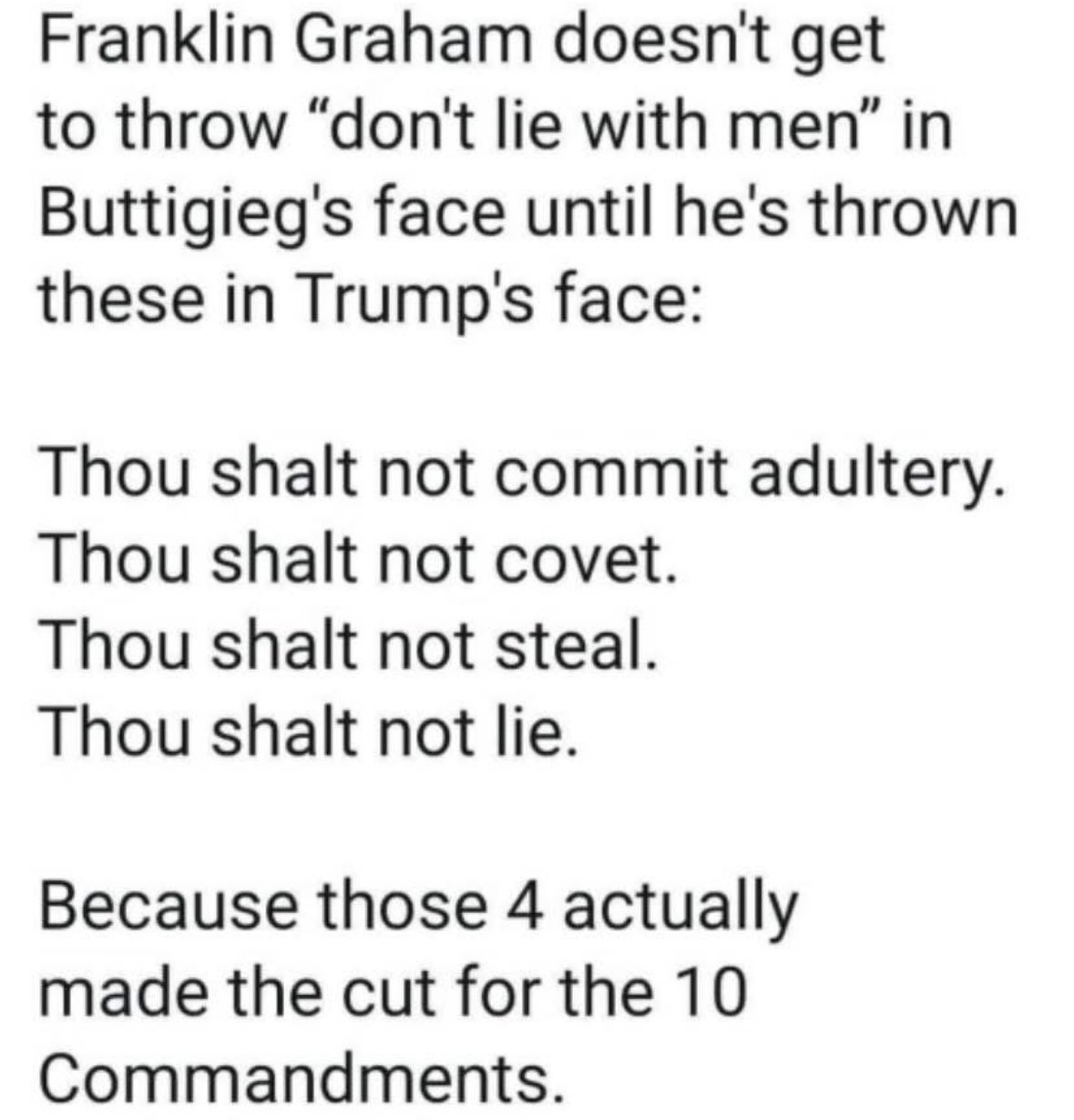
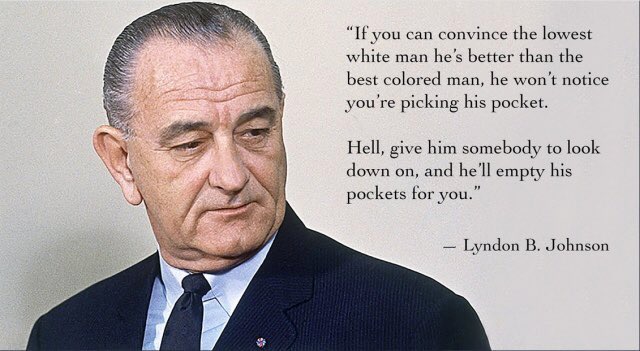
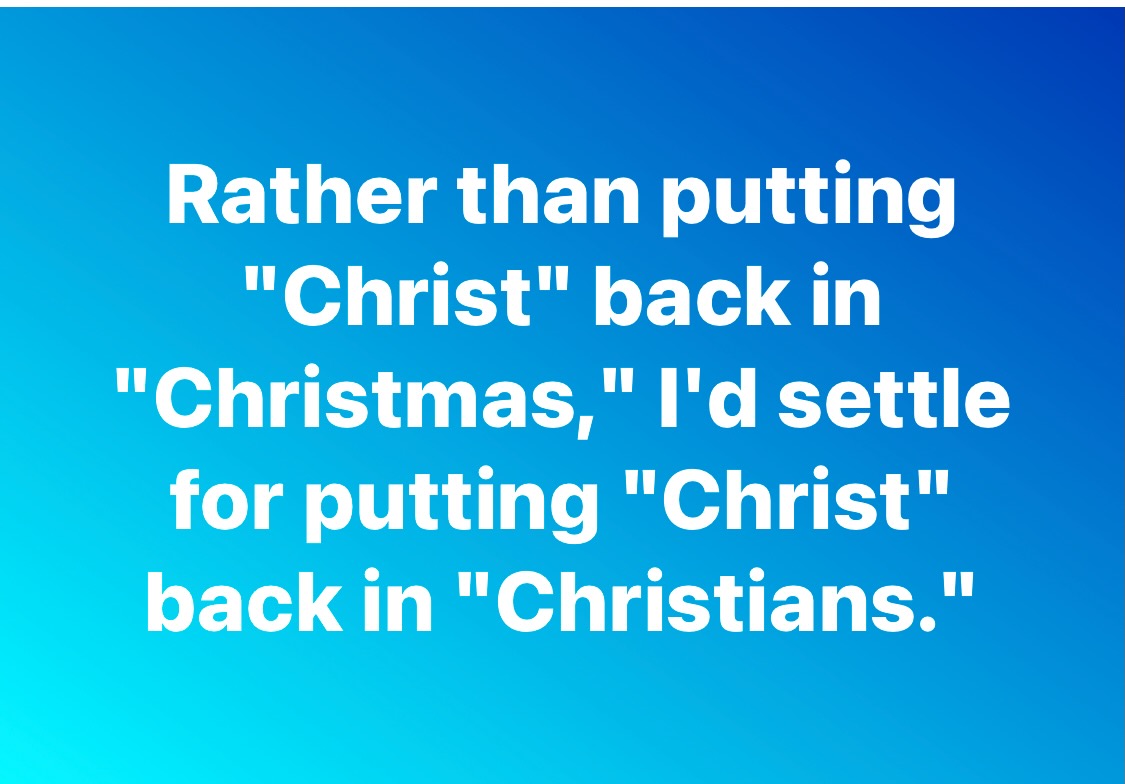
Here’s another political collection of memes of note. . . .
An appeal to mercy for demonized groups challenges the narratives that demonize them.
When you worship power, things like mercy, empathy, and compassion will begin to sound like a compromise or a weakness, or even worse, they will sound like sins. When you worship power, the structures and people who maintain that power must prioritize authority, not mercy, forgiveness, or compassion. When you worship power, the more ruthless you are towards those you’ve already chosen to see as your ‘enemies,’ the more righteous you become. When you worship power, you see power as synonymous with the truth, and the truth should never be questioned or criticized. The worship of power has no room for mercy. This worship of power is why authoritarianism has become so appealing to far too many Christians. This worship of power is why the appeal to mercy is treated like a threat.
. . . [Y]ou will see certain politicians and pastors alike being supported by many Christians for high positions of power, no matter their crimes or abuses towards others, because as long as they are willing to use their power in order to protect and enforce what they believe to be “Christian values,” their moral character doesn’t matter. Securing and maintaining power is all that matters in this belief system.
. . . [O]ne of the most blatant forms of Christian hypocrisy in our time right now is Christians holding all the ordinary people we share this country with accountable to the most rigid moral standards while simultaneously holding their preferred politicians accountable to no standards at all. The greater the power one has, the less they will be held accountable to any moral standard. That’s what worshiping power looks like.
. . . Evangelical Christian leader Russell Moore said that multiple pastors had told him disturbing stories about their congregants being upset when they read from the ” Sermon on the Mount” in which Jesus espoused the principles of forgiveness and mercy that are central to Christian doctrine. “Multiple pastors tell me, essentially, the same story about quoting Jesus in the Sermon on the Mount – [and] to have someone come up after to say, ‘Where did you get those liberal talking points?” Moore added: “And what was alarming to me is that in most of these scenarios, when the pastor would say, I’m literally quoting Jesus Christ, the response would be, ‘Yes, but that doesn’t work anymore. That’s weak.”
. . . [N]owhere in the gospel accounts is Jesus seen checking someone’s legal status before welcoming them. Nowhere in the gospel accounts is Jesus seen making sure someone has a job before he “hands out” food to them. Nowhere in the gospel accounts is Jesus seen making sure someone was straight so could make sure he wasn’t “tolerating sin” by spending time with them.
As [a] powerful woman of God once said, “Jesus was not killed by atheism and anarchy. He was brought down by law and order allied with religion – which is always a deadly mix. Beware those who claim to know the will of God and are prepared to use force, if necessary, to make others conform. Beware those who cannot tell God’s will from their own.” (Rev. Dr. Barbara Brown Taylor)
“Blessed are the merciful, for they shall be shown mercy.” (Jesus)
Rev. Cremer invites us to (re)visit John 3:16-17 (not just the 16th verse) and Romans 1:29-32.
In the days of I Samuel 8, the people demanded a king. Samuel took his distress over this to God, who told him that the people weren’t rejecting his leadership but instead were rejecting God—”forsaking me and serving other gods.” In the face of the people’s rejection of faith in God, Samuel was instructed to be sure the people knew what they were asking, to be sure they understood the choice they were making.
So Samuel told the people what God said:
“This is what the king who will reign over you will claim as his rights: He will take your sons and make them serve with his chariots and horses, and they will run in front of his chariots. 12 Some he will assign to be commanders of thousands and commanders of fifties, and others to plow his ground and reap his harvest, and still others to make weapons of war and equipment for his chariots. 13 He will take your daughters to be perfumers and cooks and bakers. 14 He will take the best of your fields and vineyards and olive groves and give them to his attendants. 15 He will take a tenth of your grain and of your vintage and give it to his officials and attendants. 16 Your male and female servants and the best of your cattle[c] and donkeys he will take for his own use. 17 He will take a tenth of your flocks, and you yourselves will become his slaves. 18 When that day comes, you will cry out for relief from the king you have chosen, but the Lord will not answer you in that day.” (1 Samuel 8: 11-18)
And still they rejected God in favor of a king’s so-called leadership.
I’m not suggesting that previous administrations have been godlike in any way. But except for the 45th administration, the ones I’ve know haven’t been as mean and ignorant as this 47th will be. Except for the 45th, none have so greedily sought to be king. We look for our Samuel to the people, our David to Saul, our Nathan to David, our John the Baptist to Herod.
Every year between Christmas and Epiphany (January 6), I read James Joyce’s “The Dead,” widely regarded as one of the best short stories ever written in English and the final story in the classic collection Dubliners. The setting is the “Misses Morkan’s annual dance” and dinner party. The hostesses are elderly Miss Kate and Miss Julia Morkan and their niece Mary Jane. The main character is Gabriel Conroy, Julia and Kate’s nephew, whose mother was their late sister.
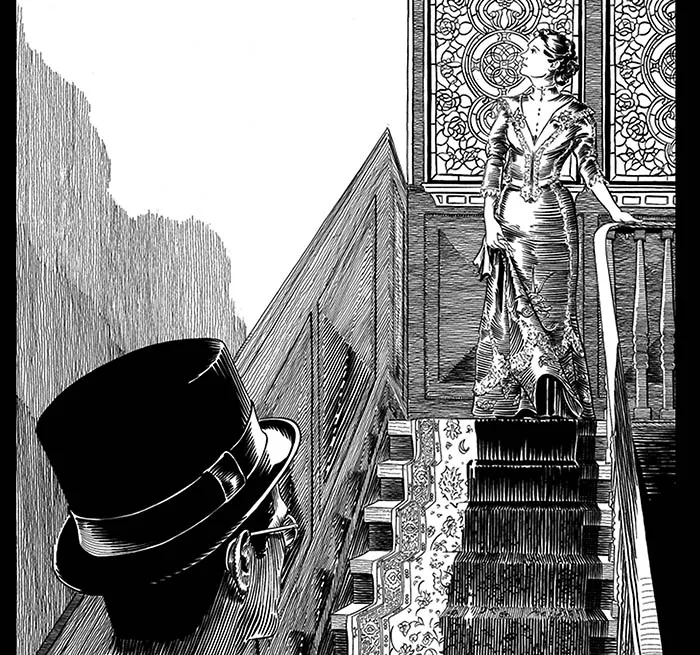
The party breaks up late, and Gabriel and his wife Gretta make their way through cold and snow to a Dublin hotel for the night. But before they leave the Morkan house, Joyce creates a beautiful scene in which Gretta is standing on the first landing of the stairs, where she is listening so somebody up above playing the piano and a man singing. Gabriel stands at the foot of the stairs looking up at his wife:
He stood still in the gloom of the hall, trying to catch the air that the voice was singing and gazing up at his wife. There was grace and mystery in her attitude as if she were a symbol of something. He asked himself what is a woman standing on the stairs in the shadow, listening to distant music, a symbol of. If he were a painter he would paint her in that attitude. Her blue felt hat would show off the bronze of her hair against the darkness and the dark panels of her skirt would show off the light ones. DISTANT MUSIC he would call the picture if he were a painter.
Later, in their hotel room lit only by streetlights, he asks her about the song she heard, and she tells him it was “The Lass of Aughrim.” When he asks why the song made her cry, she tells him the story from her girlhood, when she was loved by a boy named Michael Furey, who used to sing that song to her. When Gabriel breaks out in peevish anger – just before, he was lusting to get her into bed – and says something cutting about her wanting to visit her native region to rekindle her young love of this Furey boy. That’s when she tells him that Michael Furey is dead. Joyce writes, “Gabriel felt humiliated by the failure of his irony and by the evocation of this figure from the dead, a boy in the gasworks.” He becomes even more flustered when he learns that the boy died of a lung condition and overexposure to the weather when he visited her on a cold and rainy night out of a desire to see her one last time before she left for school.
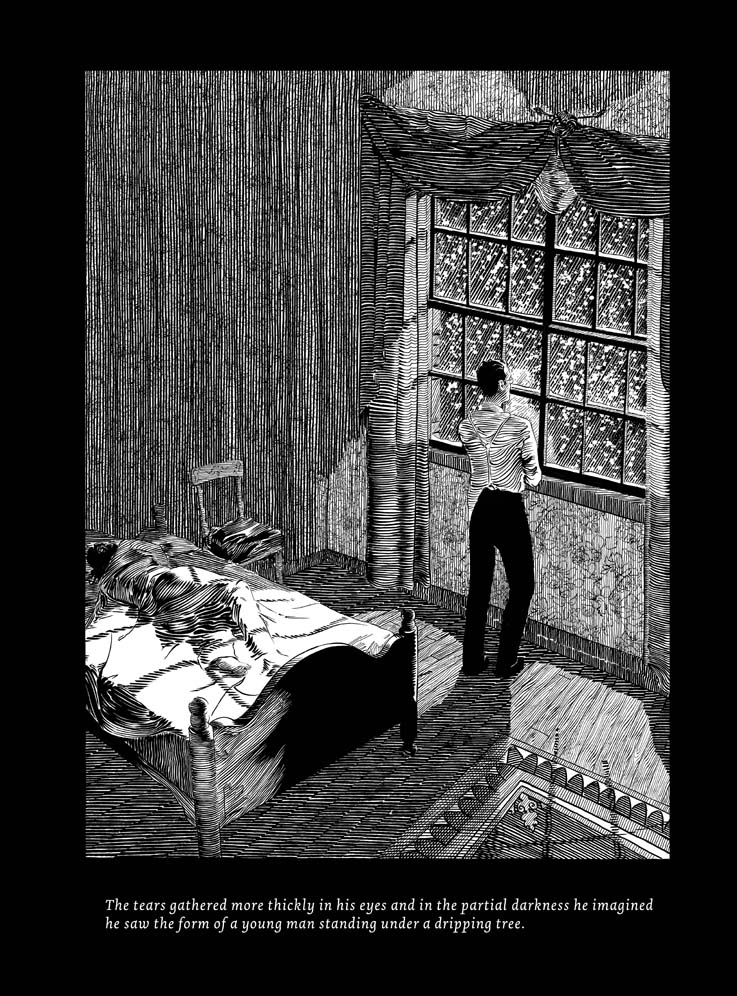
Gretta cries herself to sleep and leaves Gabriel standing by the window and looking out on the night. He feels tenderly for her having spent all their years together, even their most intimate moments, with this secret “locked in her heart.” He feels sad for himself and for her as he realizes that he perhaps has never loved anybody – not even Gretta: “He had never felt like that himself towards any woman but he knew that such a feeling must be love.”
Joyce’s great story “The Dead” ends, appropriately, with what I consider to be one of the most beautiful paragraphs ever written in English:
A few light taps upon the pane made him turn to the window. It had begun to snow again. He watched sleepily the flakes, silver and dark, falling obliquely in the lamplight. The time had come for him to set out on his journey westward. Yes, the newspapers were right: snow was general all over Ireland. It was falling on every part of the dark central plain, on the treeless hills, falling softly upon the Bog of Allen and, farther westward, softly falling into the dark mutinous Shannon waves. It was falling, too, upon every part of the lonely churchyard on the hill where Michael Furey lay buried. It lay thickly drifted on the crooked crosses and headstones, on the spears of the little gate, on the barren thorns. His soul swooned slowly as he heard the snow falling faintly through the universe and faintly falling, like the descent of their last end, upon all the living and the dead.
I find this so moving that a few years ago, when I was somewhere – Gatlinburg maybe – on a writing weekend away, I attempted to capture some hint of the emotions this conclusion of “The Dead” inspires in me. Below is what I came up with.
Michael Furey Is Dead
She stands on the stair and listens to the waltz floating down from above, Her face half hidden in shadow half in light. The ghost of a sad smile trembles on lips freshly colored with care, And I tremble at the sight and I wonder what she might be thinking.
She doesn’t know that I saw her as we walk side by side on the street, Both acting just like we didn’t feel what we felt. My tongue tripping over her mystery, hers trying to cover it up. Then I ask her if she’s well, Then I beg for her to tell what she’s feeling.
Oo Oo Oo—Michael Furey is dead—Oo Oo Oo
Deep in the days of a cold and wet autumn, they took waltzing walks in the wood. A delicate boy and a handsome young woman they were. She was an orphan with her aunt until winter, when she’d pack up and go back to school. And he worked in the mines, and he coughed all the time they were dancing.
[Waltz-rhythm interlude]
The weather turned black before she was to leave, the rain fell without taking a breath. Her dark-haired boy waited wet and alone ’neath the trees. She’d been back to school for only one week when the letter arrived from her aunt. And it brought her to her knees with its news of Michael Furey’s passing.
Oo Oo Oo—Michael Furey is dead—Oo Oo Oo
I stand by the window and listen as her sobs subside into sleep And look for the ghost of the boy who died for love of my wife. The stars hang in heaven like the caught breath of snow or like sparkling rain in dark hair. And I tremble at the sight, and I wonder what she might be dreaming. And I tremble deep inside, and I’m afraid of what she might be dreaming.
Oo Oo Oo—Michael Furey is dead—Oo Oo Oo
I played this song live a few times soon after I wrote it, but I’ve never recorded it. I need to do some simple recording soon so that I don’t lose it. If I get the chance to record one last album, I’ll maybe close it with “Michael Furey Is Dead.”
SPECTRAL GEOFF: Did you know that giraffes are, like, 30 times more likely than people to get struck by lightning?
ME: Makes sense, I guess. They’re generally closer to the source. They always told us not to stand under a tree in a thunderstorm. Maybe the same should be said about giraffes—as in don’t stand under ’em.
SG: And did you know that with this Inauguration, Donald Trump has the unprecedented opportunity to become the two worst presidents in U.S. history?
M: I hadn’t thought of it that way. Quite an achievement if he can pull it off.
SG: And did you also know that a chicken once lived 18 months without a head?
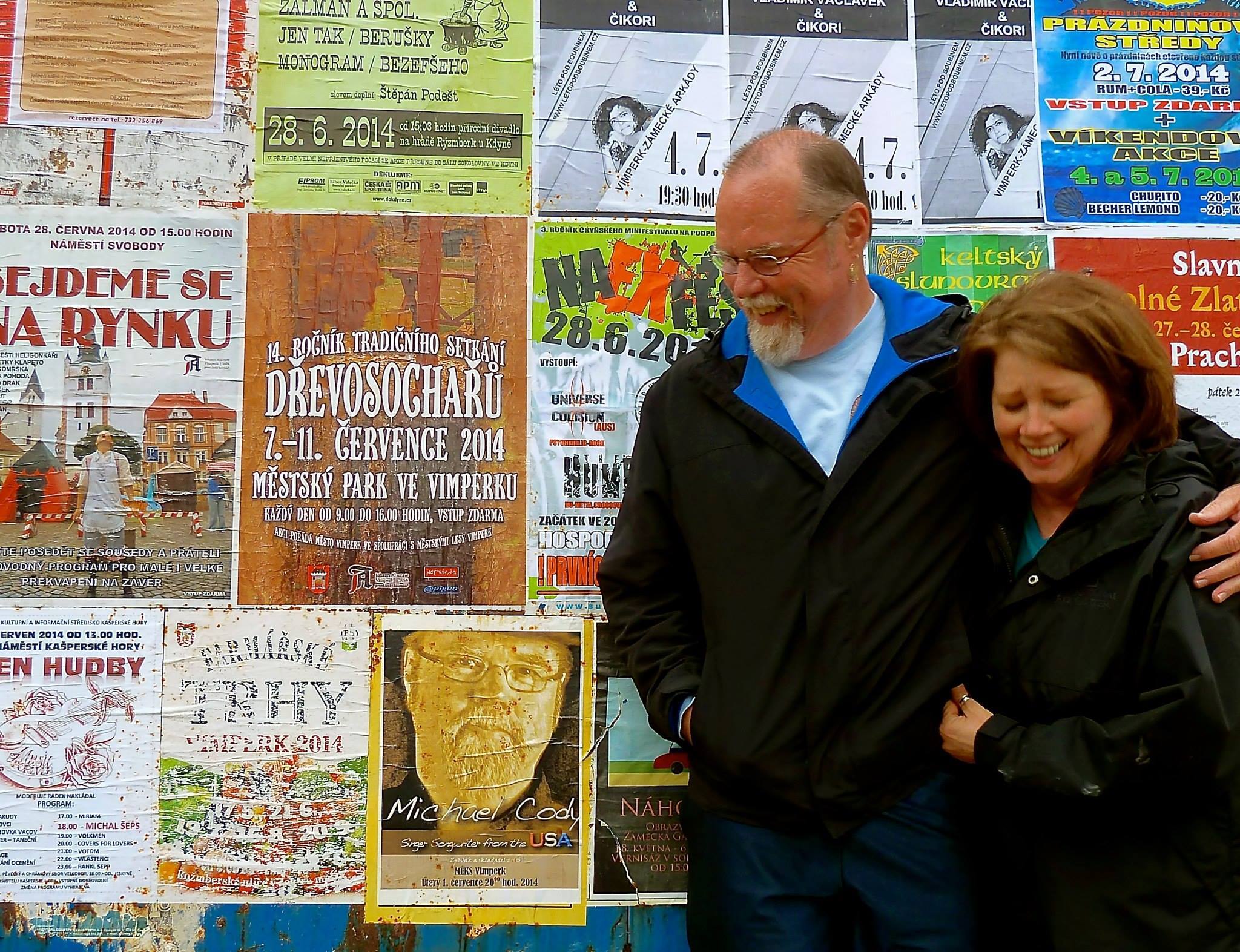
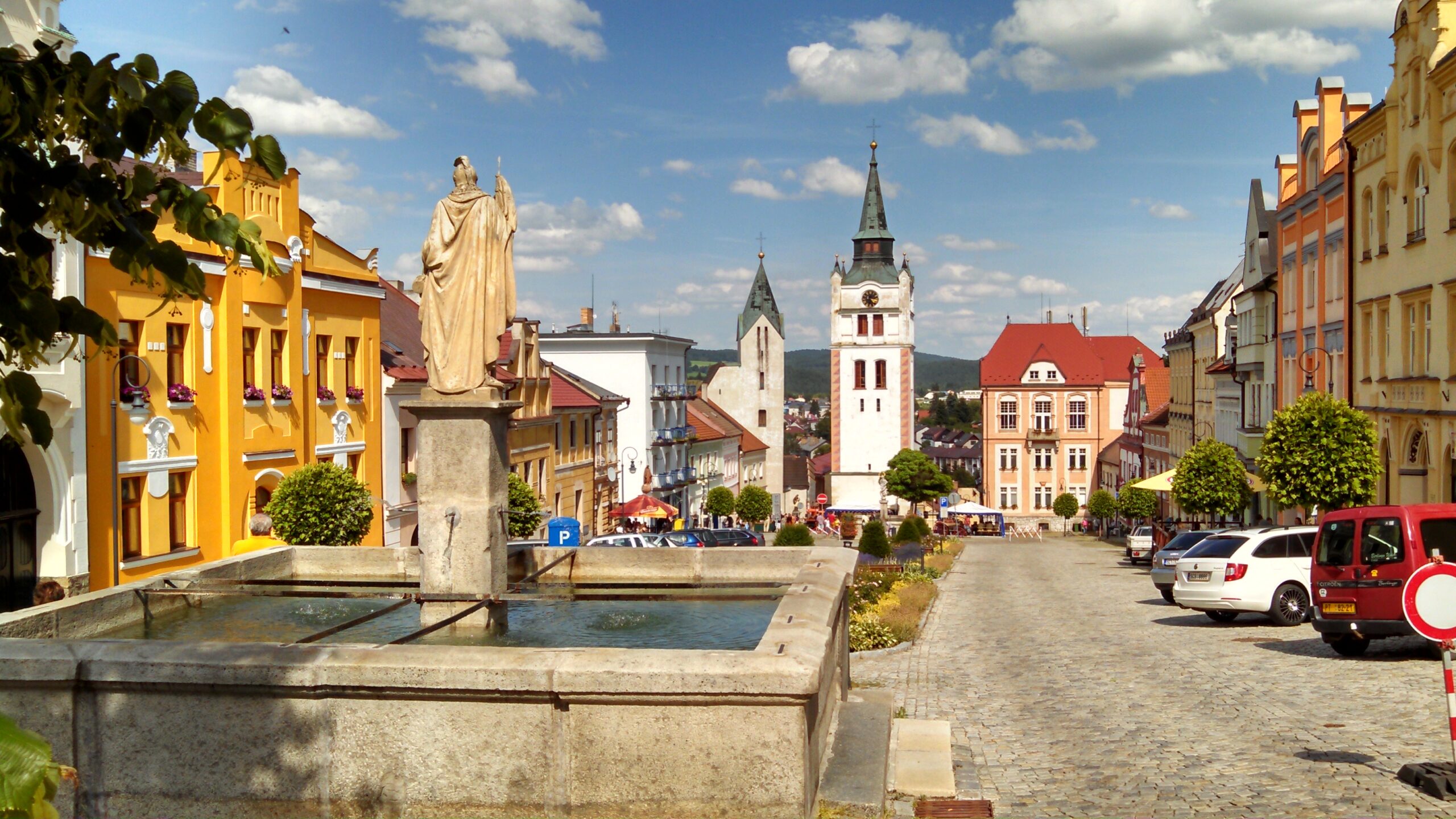
Back in 2014, Leesa and I traveled with a group of friends to Vimperk, a small town in the southwestern portion of the Czech Republic (aka Czechia). A bunch of us lived for a week in a hostel on Vimperk’s beautiful cobblestone square. At least that’s where we slept. During the day, we were on the run, offering a softball camp for youth and English camp for adults. In the evenings, we did a good bit of sightseeing.
In the middle of that week, I played a concert for the town. We found advertisements for this event scattered around Vimperk when we arrived.
It was a terrific experience all around.
In 2015, Leesa and I decided—for a number of reasons—not to go back, but we really missed the place and the people and turned our eyes toward 2016. Meantime, I began to think about a song for Vimperk.
One of the surprising things about that 2014 trip came in the form of good sleep. I’m a white-noise sleeper. I keep a fan running beside the bed every night, not for the breeze but for the steady sound of it. Not only would the hostel where we slept be without a steady hum to lull me to sleep, but also there were bells. Bells, bells, bells all through the night. The clock tower in the square rings its bells every fifteen minutes—one bell for the quarter hour, two for the half, three for a quarter ’til, four for the hour with these last followed by the deeper, louder bell tolling the hour itself. I couldn’t very well pack a fan for the trip, so I bought some melatonin and hoped for the best.
But it wasn’t long before something—the Old-World ambiance; tiredness from travel and engaging with the Czechs (young and not so young); running to take in the sights; something—lulled me to sleep and gave me a good night’s rest every night. Sure, I was to some degree roused from sleep every quarter hour, but rather than being annoyed at the interruption or unable to get back to sleep, I felt a distinct sense of peace and comfort from lying down to rising up.
During 2015, when I both wanted to write a song for Vimperk and knew, at the same time, I couldn’t go back that year, the image of those bells became the spark that lit my way into the lyric.
The bells of Vimperk ring the quarter hour through the night. Hear their voices on the air! And the bells of Vimperk sing that everything’s all right—sleep tight. All is well down in the square . . . and quite like a prayer.
That’s where the song started.
I’m not going to write much here about what went into the two verses. Suffice to say that they contrast the two worlds as I thought about them at that moment. The first verse is set somewhere like Johnson City or Asheville or Nashville, the second in Vimperk. You should be able to figure out my feelings about these contrasting cultural experiences.
This is a noisy world that clamors for my short attention— Talking heads that blather on and on and on. The streets are filled with sirens—some real and some legendary— From the setting to the rising of the sun. Come Friday night the bars are loud and crowded with the lonely, Seeking some attention or some means of escape. I leave my car downtown and take a taxi home, Where stone awake my mind drifts half a world away.
The bells of Vimperk . . .
So, that’s the first verse. Here’s the second.
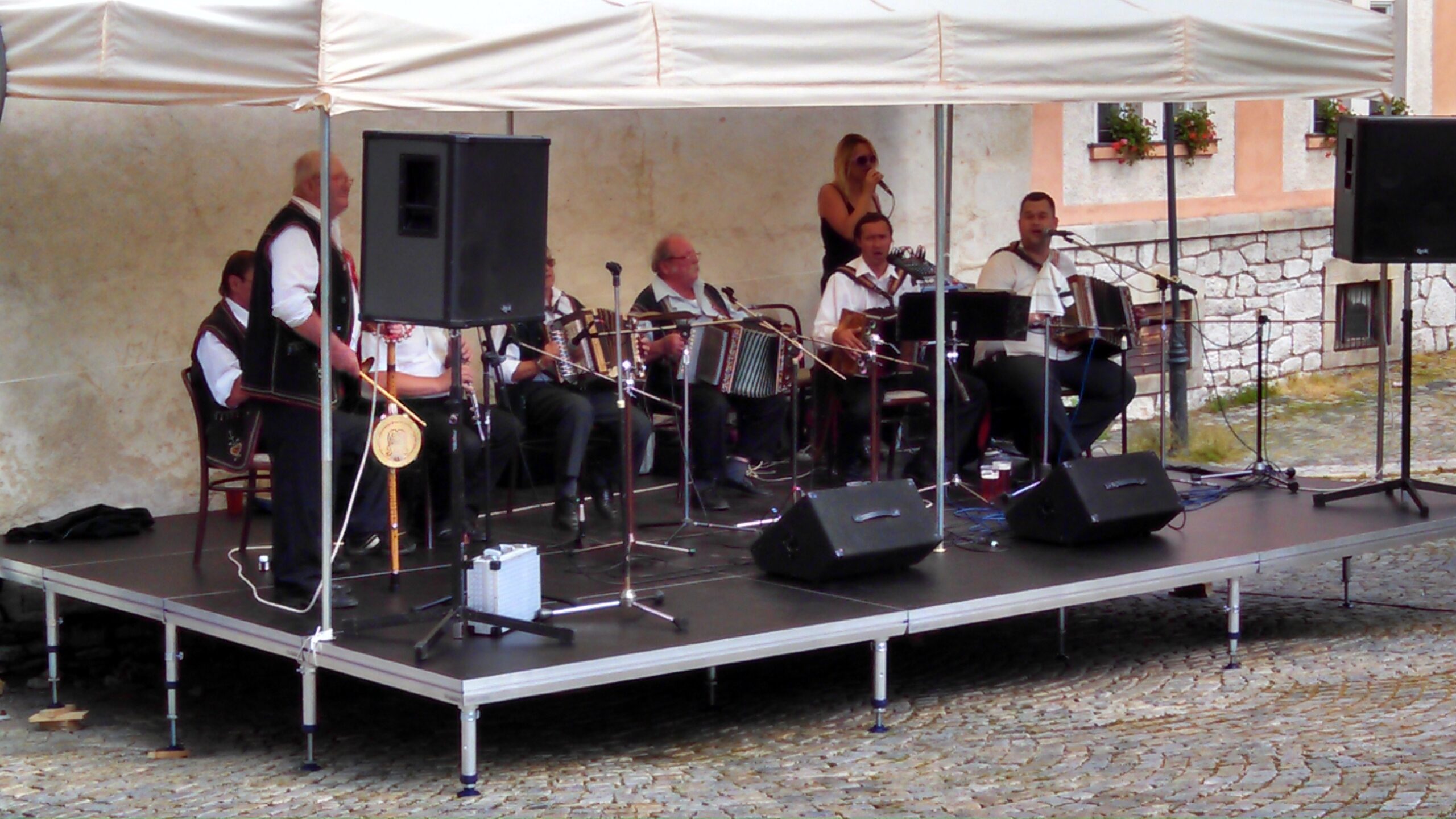
Music echoes through the sunlit streets of cobblestone. It’s “Country Roads” by an accordion band. And the old men on the stage hold lovers in their laps and squeeze them, Making the music everyone can understand. Come Friday night the pub’s alive with flutes and fiddles and guitars That long past midnight fade to soft lullabies, Sung in harmonies that carry me home, Where warm and weary I lie down and close my eyes.
The bells of Vimperk . . .
I was told at the beginning of the 2014 trip that many Czechs love John Denver’s “Country Roads.” (Actually, I learned many years later that they prefer a Czech version from one of their own singers.) When we first arrived at the door of our hostel on the cobblestone square, a small festival of some sort festival was happening. On a stage beneath the clock tower, an accordion band was playing—can you believe it?—”Country Roads”!
To the bridge!
The world is older there, But it’s somehow younger, too. When the ground beneath my feet is shaken, I go there and find my faith renewed.
The bells of Vimperk . . .
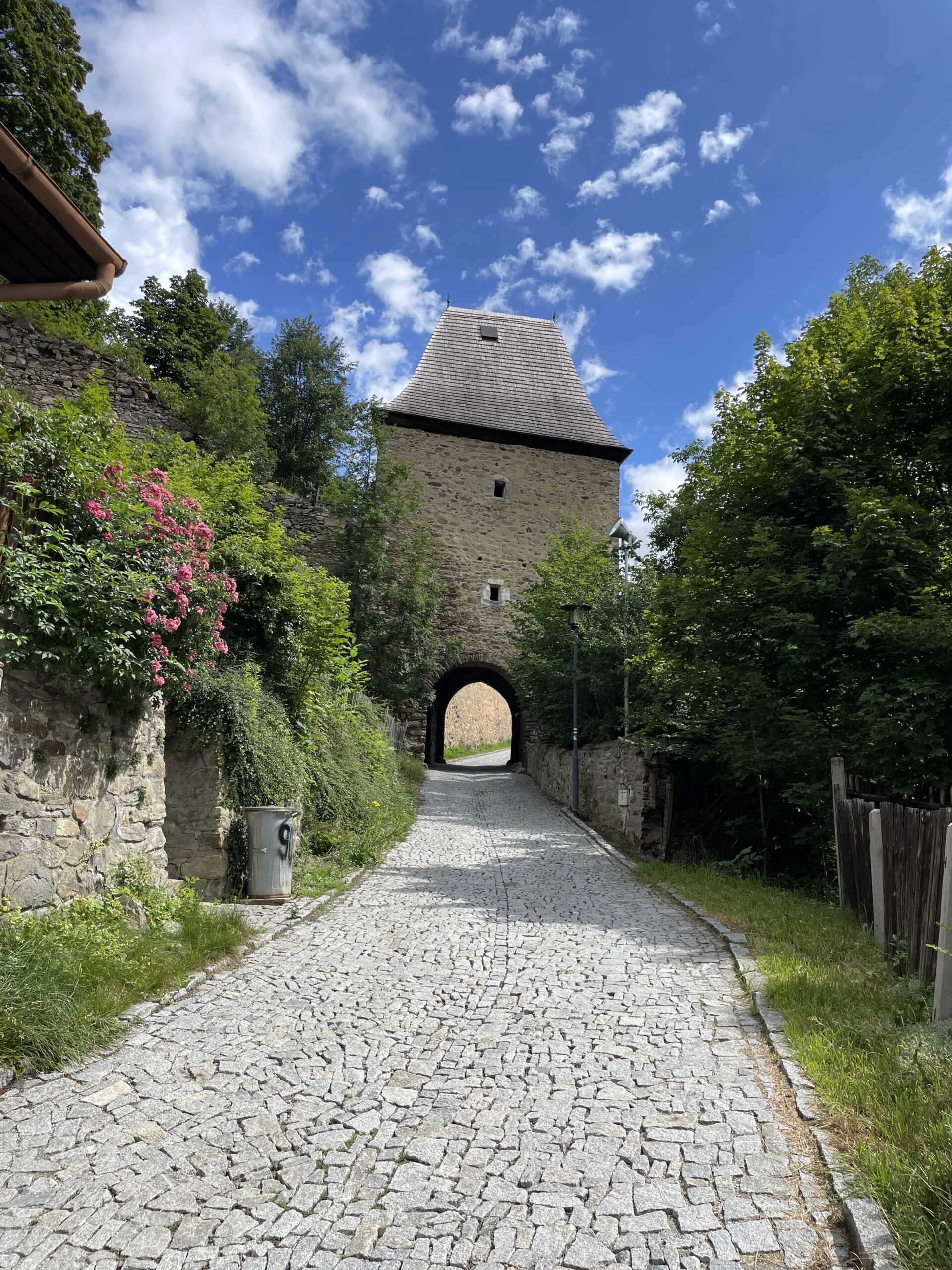
The bridge of the song tries to feel its way to an idea I find difficult to express. Vimperk has been there in hills so much like our own for more than twice the lifetime of the U.S. In 2014, our final team meal was at a home on a hill above Vimperk. The house itself was as old as the US. Pictured below, the Black Gate on the hillside beneath the castle was built in 1479, which is a century and a half before the Puritan Pilgrims arrived in Massachusetts Bay to establish Plymouth Plantation (1620).
I feel certain that the place’s feeling younger (while being so much older) has to do with a number of things. First, I’m sure those of us who love Vimperk and the people we know there tend to romanticize its Old-World beauty, the slower pace of a small town, the foreignness and yet familiarity of it, a kind of fairytale quality that radiates from its castle and cobblestones and surrounding forests. We don’t see the drugs, which are surely there. We don’t see much if any of the poverty, which is surely there. We don’t see much of its prejudices—against the Roma (so-called “Gypsies”), for example. We don’t see much of the ignorance and meanness and violence that are surely there as well—I mean, come on, they’re mostly igno-arrogant white people like us, aggressive and colonizing in both large (global) and small (local) ways.
What we do sometimes see, however, at least among most of those we come in contact with, is a way of relating to one another that often seems lost here. One quick example: in the softball camp setting, an atmosphere of caring for each other and cooperating with each other is evident. Rarely here in the U.S. would you see teens willing to play with the little kids without being made to do so. That happens all the time at camp without any teen tantrums. At lunch, you’ll find tables made of up teens who are sitting and eating with kids much younger than themselves.
So, anyway, Leesa and I returned to Vimperk in 2016, and I performed another concert and enjoyed the opportunity to play “The Bells of Vimperk” for our friends in Vimperk. Below is a phone video of that performance.
Performing “The Bells of Vimperk” for the first time in Vimperk on Tuesday, 12 July 2016
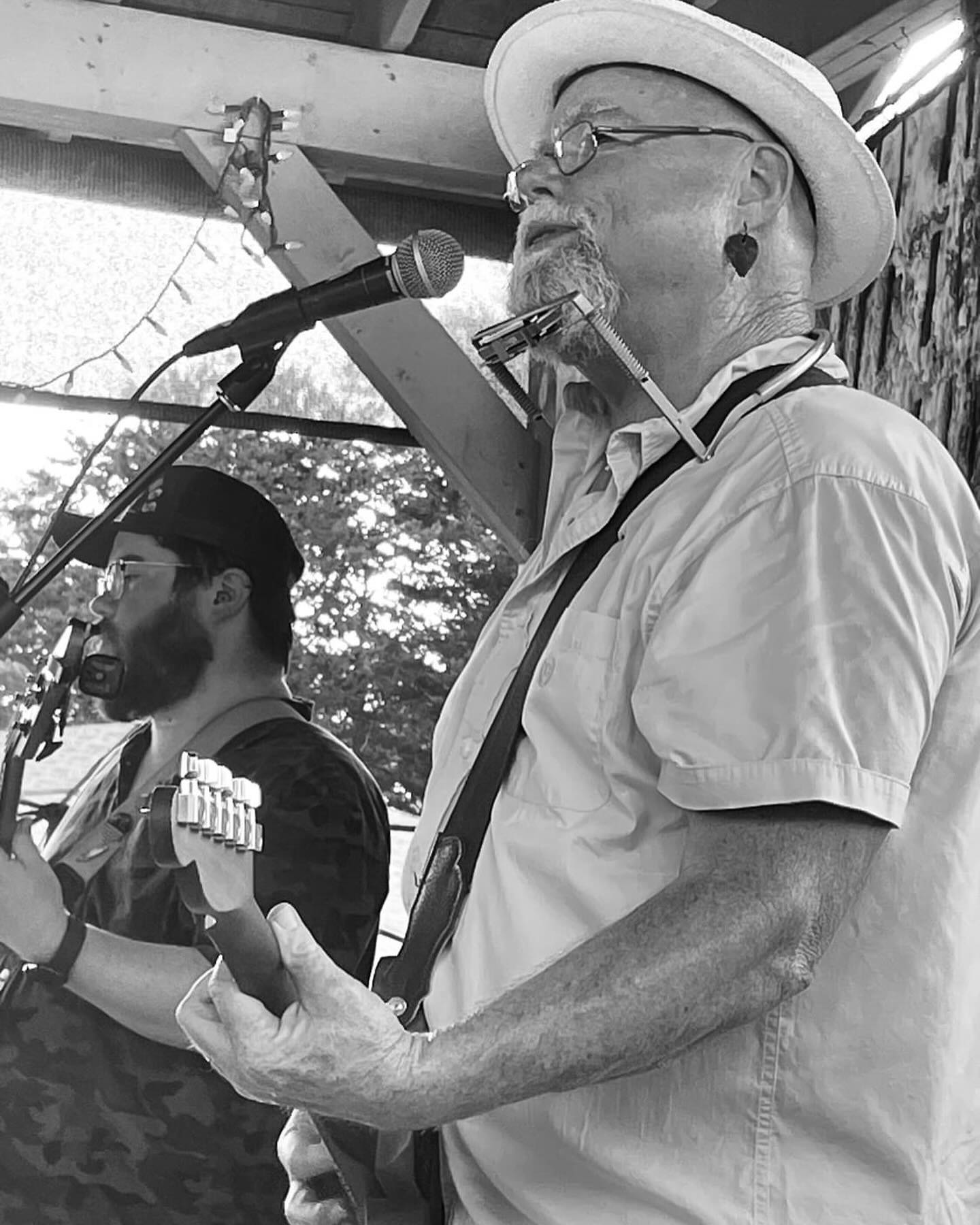
Recently I played a backyard concert at the Barnett Patio here in Johnson City, and my son Raleigh sat in on bass (along with my friend Jimmy on percussion). I don’t know if Raleigh had ever even heard “The Bells of Vimperk,” but at the end of the night, he said, “Deddy, that might be your best song.” I’ll take that!
This is a noisy world that clamors for my short attention— Talking heads that blather on and on and on. The streets are filled with sirens—some real and some legendary— From the setting to the rising of the sun. Come Friday night the bars are loud and crowded with the lonely, Seeking some attention or some means of escape. I leave my car downtown and take a taxi home, Where stone awake my mind drifts half a world away.
The bells of Vimperk ring the quarter hour through the night. Hear their voices on the air! And the bells of Vimperk sing that everything’s all right—sleep tight. All is well down in the square . . . and quite like a prayer.
Music echoes through the sunlit streets of cobblestone. It’s “Country Roads” by an accordion band. And the old men no the stage hold lovers in their laps and squeeze them, Making the music everyone can understand. Come Friday night the pub’s alive with flutes and fiddles and guitars That long past midnight fade to soft lullabies, Sung in harmonies that carry me home, Where warm and weary I lie down and close my eyes.
The bells of Vimperk ring the quarter hour through the night. Hear their voices on the air! And the bells of Vimperk sing that everything’s all right—sleep tight. All is well down in the square . . . and quite like a prayer.
The world is older there, But it’s somehow younger, too. When the ground beneath my feet is shaken, I go there and find my faith renewed.
The bells of Vimperk ring the quarter hour through the night. Hear their voices on the air! And the bells of Vimperk sing that everything’s all right—sleep tight. All is well down in the square . . . and quite like a prayer.