






From The Atlantic
Michael Amos Cody
From The Atlantic
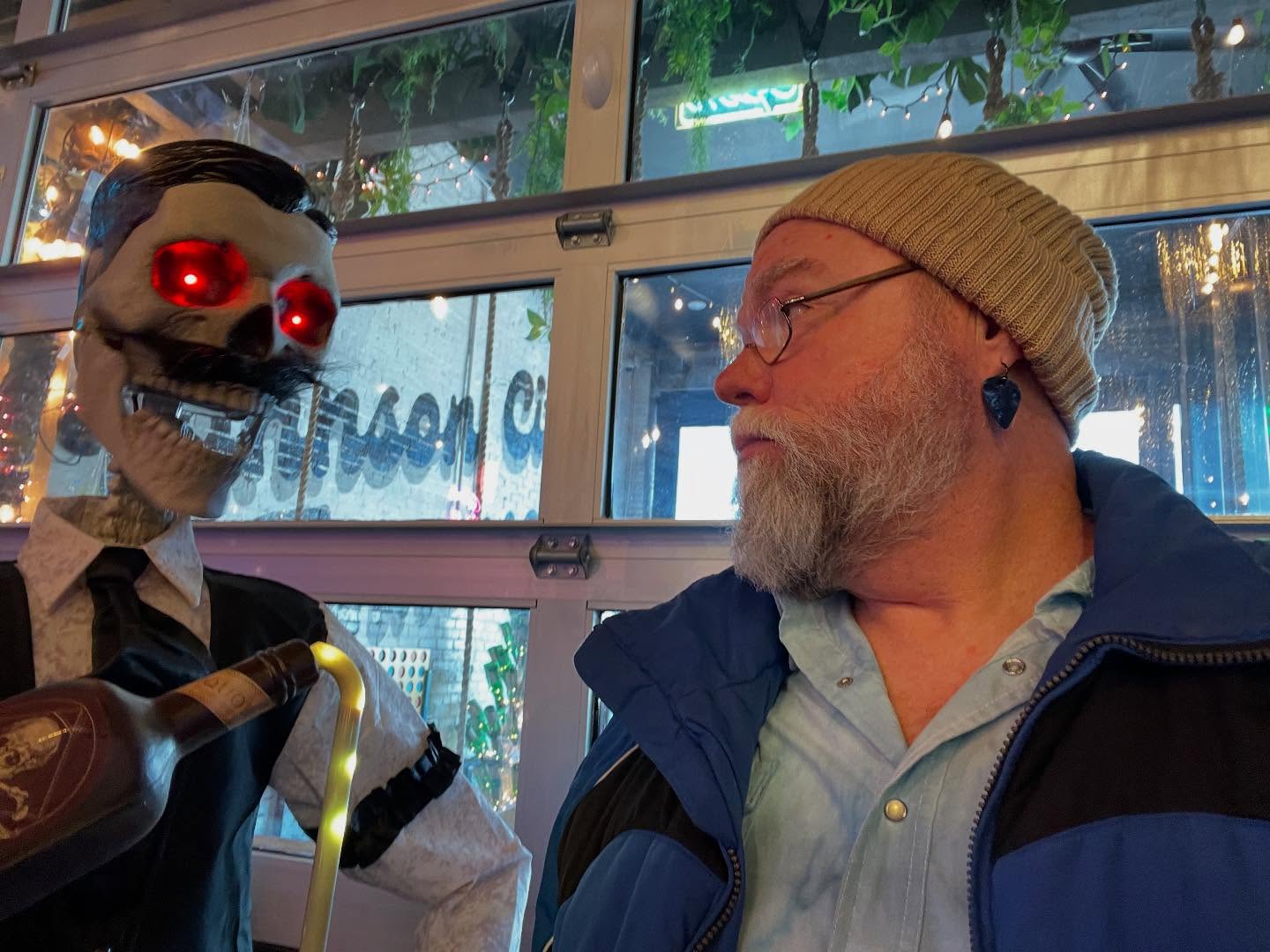
SPECTRAL GEOFF: Did you know that giraffes are, like, 30 times more likely than people to get struck by lightning?
ME: Makes sense, I guess. They’re generally closer to the source. They always told us not to stand under a tree in a thunderstorm. Maybe the same should be said about giraffes—as in don’t stand under ’em.
SG: And did you know that with this Inauguration, Donald Trump has the unprecedented opportunity to become the two worst presidents in U.S. history?
M: I hadn’t thought of it that way. Quite an achievement if he can pull it off.
SG: And did you also know that a chicken once lived 18 months without a head?
M:

Spectral Geoff’s first and third facts from
“101 random fun facts that will blow your mind”
According to Mountford Writing, a blurb is “the effusive (and sometimes elusive) praise you see on book jackets — ‘Brilliant debut…’ — enticing readers to pick up a novel or memoir and take it home.” And according to Sarah Elisabeth Sawyer’s Fiction Courses newsletter, blurbs fall into the category of “love ’em, hate ’em, gotta have ’em.”
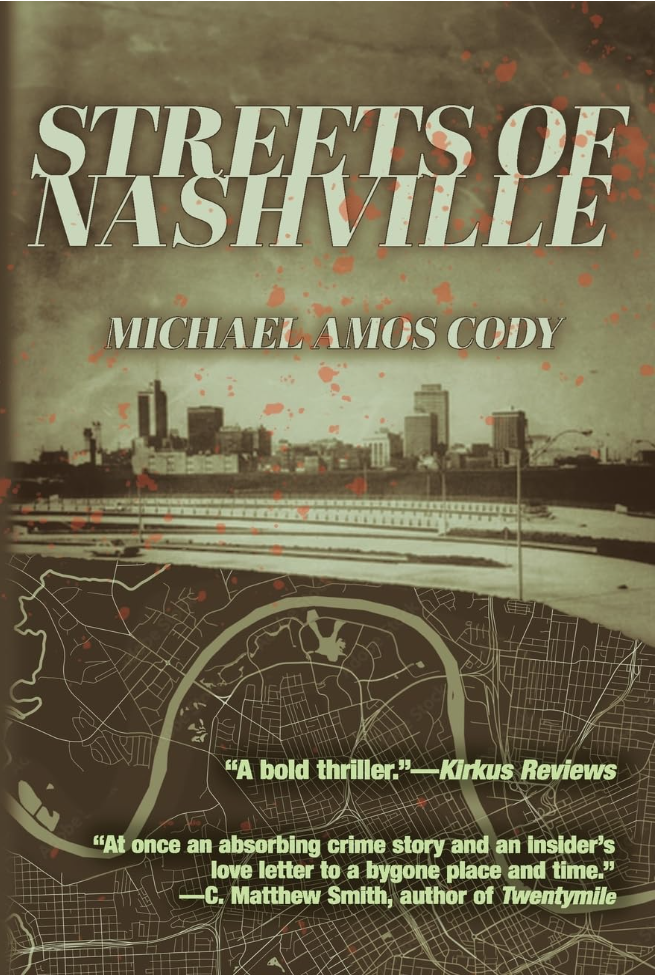
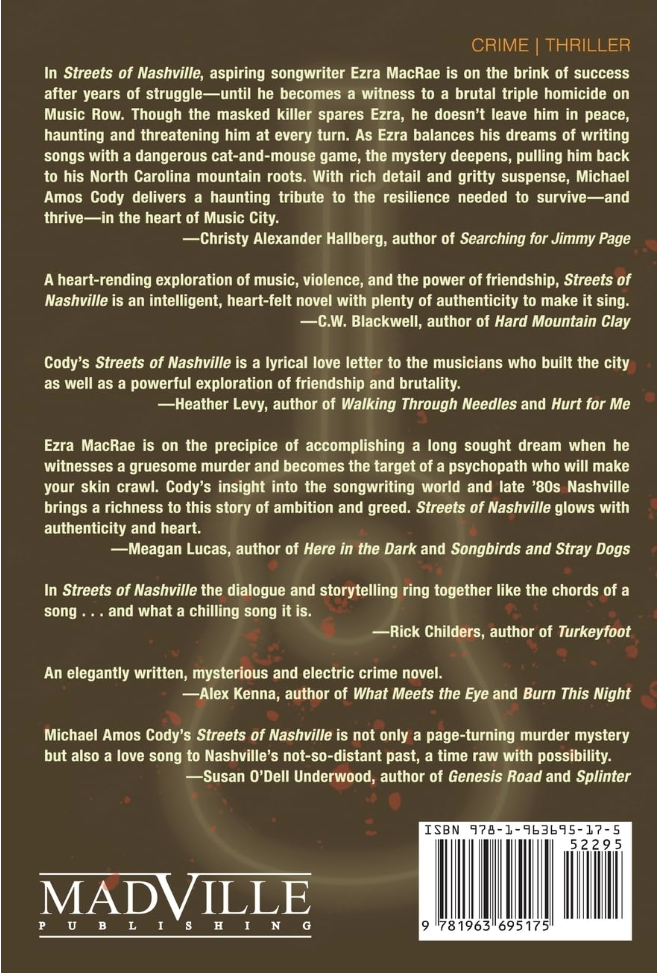
I don’t know if blurbs sell books or not, but I’ve been fortunate to land some prize ones for Streets of Nashville. This seems a good place — and time — to share what they are saying about the novel (“they” being fellow authors). See below in alphabetical order.
C.W. Blackwell is author of Song of the Red Squire and Hard Mountain Clay:
Michael Amos Cody does a fantastic job creating interesting and empathetic characters, especially his protagonist Ezra, a budding songwriter whose perilous odyssey through the streets of Nashville is much more than grist for the mill—it’s also a heart-rending exploration of music, violence, and the power of friendship. STREETS OF NASHVILLE is an intelligent, heart-felt novel with plenty of authenticity to make it sing. Cody is a talented new voice in Southern fiction whose stories will appear on bookshelves for many years to come.
Rick Childers is author of Turkeyfoot:
From the opening chapter of STREETS OF NASHVILLE, Michael Amos Cody’s prose is packed with enough stopping power to send the bullets flying off the page. Dialogue and storytelling ring together like the chords of a song . . . and what a chilling song it is.
Christy Alexander Hallberg is author of Searching for Jimmy Page and creator and host of the Rock Is Lit podcast:
In STREETS OF NASHVILLE, aspiring songwriter Ezra MacRae is on the brink of success after years of struggle—until he becomes a witness to a brutal triple homicide on Music Row. Though the masked killer spares Ezra, he doesn’t leave him in peace, haunting and threatening him at every turn. As Ezra balances his dreams of writing songs with a dangerous cat-and-mouse game, the mystery deepens, pulling him back to his North Carolina mountain roots. With rich detail and gritty suspense, Michael Amos Cody delivers a haunting tribute to the resilience needed to survive—and thrive—in the heart of Music City, solidifying him as one of the region’s most compelling voices—a talent I’ve admired since I read his debut novel, GABRIEL’S SONGBOOK.
Alex Kenna is author of What Meets the Eye and Burn This Night:
An elegantly written, mysterious and electric crime novel. Michael Amos Cody’s experience as a Nashville songwriter and encyclopedic knowledge of country music bring STREETS OF NASHVILLE to life.
Kirkus Reviews “has been an industry-trusted source for honest and accessible reviews since 1933 and has helped countless authors build credibility in the publishing realm ever since.” Kirkus says:
An aspiring songwriter in the late 1980s finds himself at the center of a string of Nashville murders in Cody’s thriller.
Ezra MacRae is originally from small-town Runion, North Carolina, and moved to Nashville to be a professional writer of country songs. In the small hours of Easter morning in 1989, however, he finds himself a witness to a shooting on Nashville’s famous Music Row. To his surprise, the killer leaves him unharmed; later, however, the murderer develops a preoccupation with Ezra, harassing him with phone calls and other behavior that escalates to outright stalking. The shooter, Hugo Rodgers, is a former record promoter with a violent and traumatic past. Ezra spends the next week trying to aid local police and protect Benny Jack, an unhoused street singer who caught a stray bullet during the shooting. With the police hot on his tail, Hugo lures Ezra back to Runion for a final confrontation. An epilogue provides a cliffhanger that allows for a continuation of the story. Overall, this is a fast-paced, sometimes coarse, thriller about how desires can become twisted when repressed. The decision to include Hugo’s point of view is a bold but successful move that builds rather than lessens tension. Cody establishes an earthy, authentic sense of place through his prose; there’s an authentic Southern flair to the settings and characters that can feel homey or seedy, depending on the scene. The narrative is interspersed with lyrics to songs Ezra is writing, bringing an elevated lyricism to the page. . . . Ezra is a likable protagonist, as well—sensitive, ambitious, and down to earth, with enough hidden depth to make readers want to spend time with him. Rodgers, meanwhile, is the perfect foil—a despicable killer who becomes even more chilling as his violence spirals out of control.
A bold thriller, set in the music world, that leaves the door open for a possible sequel.
Heather Levy is author of Walking Through Needles, Hurt for Me, and This Violent Heart:
Cody’s STREETS OF NASHVILLE is a lyrical love letter to the musicians who built the city as well as a powerful exploration of friendship and brutality. With his authentic, empathetic voice, Cody is a welcome addition to Southern crime fiction. I look forward to more Ezra MacRae stories to come!
Meagan Lucas is author of Songbirds and Stray Dogs and Here in the Dark and founding editor of Reckon Review:
Ezra MacRae is on the precipice of accomplishing a long sought dream when he witnesses a gruesome murder and becomes the target of a psychopath who will make your skin crawl. Cody’s insight into the songwriting world and late ’80s Nashville brings a richness to this story of ambition and greed. STREETS OF NASHVILLE glows with authenticity and heart.
C. Matthew Smith is author of Twentymile:
At once an absorbing crime story and an insider’s love letter to a bygone place and time, STREETS OF NASHVILLE grabs ahold of the reader and doesn’t let go. Michael Amos Cody has written a murder ballad to make the bards of Music Row envious.
Susan O’Dell Underwood is author of Genesis Road, Splinter, and The Book of Awe:
What a rollicking narrative! Here in Michael Amos Cody’s novel is not only a page-turning murder mystery but also a love song to Nashville’s not-so-distant past, a time raw with possibility. While the setting grounds the narrative, the characters—especially our man Ezra—are riveting. With attention only a musician could mark so brilliantly, Cody has put flesh on characters by turns creatively stricken, comfort-yearning, seedy, and dangerous. STREETS OF NASHVILLE is not just powerful. In all the best ways, it is provocative, a wily rounder of a novel.
Thanks to all these terrific writers and new friends!
Thanks as well to Madville Publishing and Kim Davis!
Although I hope that the voice in your head sounds reasonable as you read the following (if anybody reads the following), feel free to hear it in a “You-kids-get-off-my-lawn!” tone if you’re into that kind of thing (and I know many of us are into that kind of thing these days).
The Republican Party no longer exists. . . .
My parents were Republicans and good people. My in-laws were Republicans and good people. I had—have—many friends who were—are—Republicans. These folks—from my parents to current friends—hold conservative values on government and economics. All well and good.
Or rather, all was well and good until actual Republicans and conservatives disappeared from this world by 1) leaving it like my parents and in-laws have done or 2) hiding—voiceless—in a daze of shock and disbelief at how their party and its ideology have been hijacked or 3) drinking the Kool-Aid and crossing over to the side of the hijackers.

Yes, the Republican Party—the GOP—still exists by name and in the news and on election ballots, but its traditional values have been trampled in the mud of their own sweat and blood by the mean and the ignorant and the arrogant, by downright idiots and the downright power hungry and the downright power hungry idiots. I know Jesus warned against calling anyone a fool (Matthew 5:22), but these days I find that admonition more difficult to abide by than most of the Ten Commandments.
Today’s so-called Republican Party is characterized by fear and its brood—anger, jealousy, anxiety. Shame and guilt often accompany fear, but today’s “Republicans” seem dead to these, probably, I think, because they no longer have a moral compass and thus lack any capacity for guilt and shame.
The things so-called Republicans fear are many: fear of the Other (typically identified by the shallow markers of skin color and makeup), fear of sharing (power, prestige, money, etc.), fear of losing (power, prestige, money, etc.), fear of the future, fear of the past (history as it actually happened, for example, or wrongs committed for power, prestige, money, etc.). Many Republicans of today (like their idiot golden—more orange really—idol/idle leader) do not recognize and will not admit these fears, but this is where the above mentioned ignorance and arrogance come in.
Conservative values are characterized not by what is right or wrong but by what is likely to keep them safe from the many, many fears they have (see above) and keep them comfortable in their judgments of what they deem right and keep them smug in their self-righteousness—all with an attitude that says, “Father, Son, and Holy Ghost, y’all sit down and shut the fuck up a minute. We got this.”
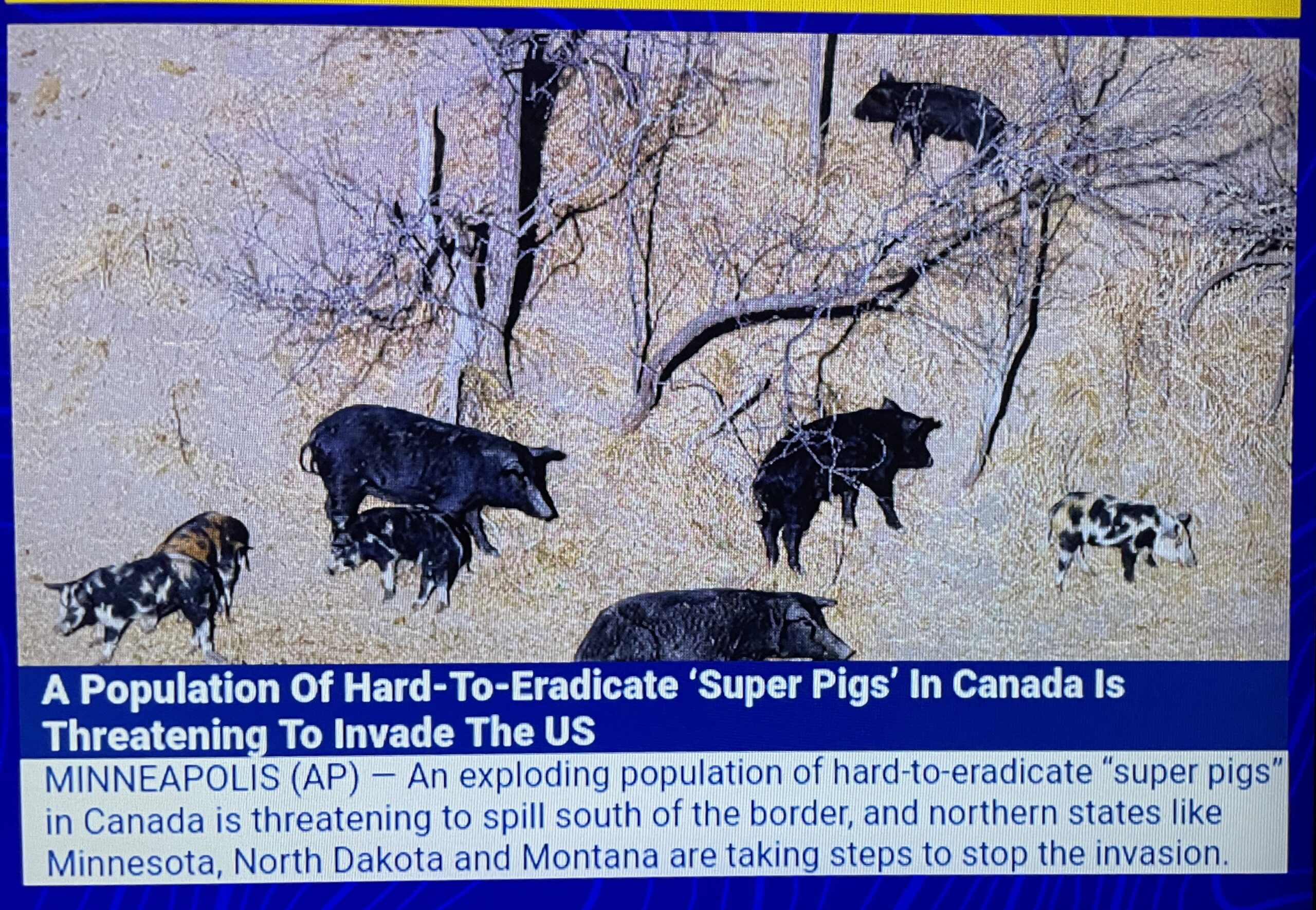
Here’s an idea. Fear the Super Pigs, why dontcha:
[Due to excessive commenting from Russian bots, I have stopped allowing comments on this blog. If you are not a Russian bot (or a bot of any other persuasion) and would like to comment, please email me at michaelamoscody@gmail.com.]
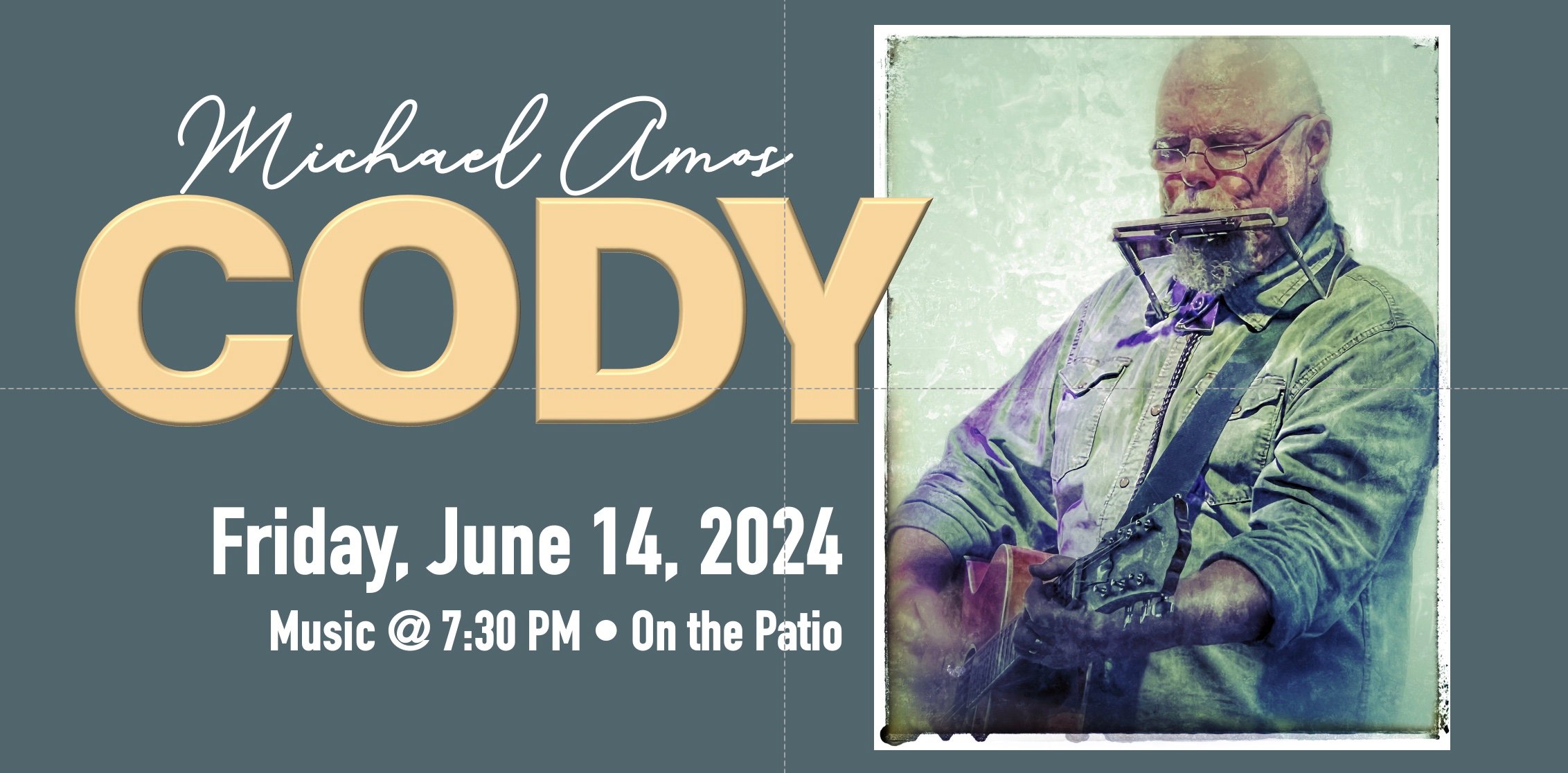
“This Is Not All” is a new song that has been with me for a while. In fact, I’ve had much of it written for several years, so I suppose it’s more accurate to say that it’s a newly completed song. It’s so newly completed that I haven’t even learned it yet. Still, that didn’t stop me from trying to play it at a recent gig on the Barnett Patio. I flubbed a bunch of it, especially toward the end, but it’s now out there in the world. I’ll continue to work on the music, but I feel like the lyrics are finished and say what I want them to say.
The first verse began with hiking a trail—going on a ramble, as my friend Scott Honeycutt calls it. The lines borrow some sentiments from Emerson, Thoreau, and Dickinson (and many others, I’m sure). We too often go out into nature, as Emerson and Thoreau caution us, looking for the big payoff in the scenery—a dramatic waterfall, the colors of autumn leaves, the mountaintop view of distance (even to the moon). Emerson writes in “Beauty,” the third chapter of Nature, “Go out of the house to see the moon, and ’tis mere tinsel; it will not please as when its light shines upon your necessary journey.”
But the trail offers much at which to wonder that is seen only if we turn our eyes away from the big picture, away from the big expectations, and look down—not necessarily down, but just look.
Not all the wonder along the trail
is to be found in woods and sky—
look closer.
It’s the tiny frog hidden in clover
and that creature in the dust with a hundred legs or more.
It’s in how I find my way home
and that flower I never noticed by the door.
I like the last two lines in particular. Have you ever thought about how wonderful it is that you can—as long as you have a sound mind—find your way home? And you probably know many different ways to get home. Consider the Keb’ Mo’ song “More Thank One Way Home.” Take that as realistically or metaphorically as you wish.
As for the last line, Emily Dickinson writes in her poem 446 (Franklin; “This was a Poet”) that the poet
Distills amazing sense
From Ordinary Meanings –
And Attar* so immense
From the familiar species
That perished by the Door –
We wonder it was not Ourselves
Arrested it – before –
(*Attar = fragrance)
Here, Dickison suggests—as Emerson does in his essay “The Poet”—that the poet (or the poetic eye) sees the richness, even the strangeness and wonder, in the familiar. Although those without the poet’s vision are subject to a kind of “ceaseless Poverty,” we still have the potential to understand and be enriched through that vision. That is, once the poet points out the wonder in the “familiar species / That perished by the Door”—”that flower I never noticed by the door”—we are enriched second-hand.
The second verse of “This Is Not All” sticks with wonder and the wonderful:
Not all the wonder along the way
is waiting somewhere far ahead—
look closer.
A little boy runs in cape and mask,
another stands shirtless in a barnyard banging a drum.
A little girl learns to cartwheel,
And another stands by the road and sticks out her thumb.
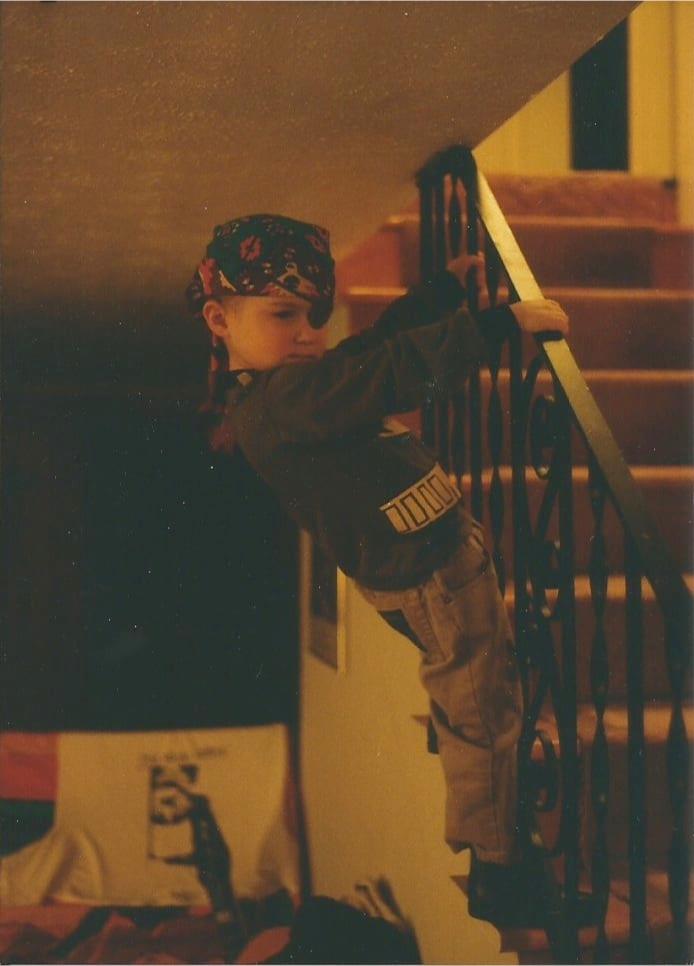
The idea here is that when we travel, whether on the road or trail or metaphorically through life, we often let the destination or goal loom so large in our minds that we ignore or lose sight of what is wonderful “along the way.” Consider the old adage that the journey is more important than the destination. The “little boy” is my son Raleigh, who had a vivid imagination and a love of costume.
The image of the other boy is from my travels at some point some years ago. I was driving in Indiana or Illinois or Iowa—somewhere with corn to the horizon. Just off the interstate was a large farmhouse, a big barn to the right of it (in the background, corn to the horizon from which a storm approached). In the barnyard, this kid—a teenager, at least—sat behind a full drum set and seemed in the middle of a massive rock ‘n’ roll show drum solo. A vivid, amazing scene!
The cartwheeling and hitchhiking girls are less real images than they are contrasts in innocence and experience, security and danger. But each of these has in it an element of wonder.
The song takes a dark turn to look at evil. The third verse recognizes that we leave ourselves open to the threatening workings of evil if we believe that it exists only in obvious places—”the terrorist and thief.”
Not all the evil in the world
is in the terrorist and thief—
look closer.
It’s in the thousand faces of ignorance—
political and corporate and religious.
It’s in the hate and hunger
and the trumped-up fights that pit them against us.
Ignorance is possibly the worst evil in our world today. Many of us seem to be getting to the point where we can’t see anything except through the lenses of ignorance, rage, and prejudice, our desire to win at all cost (while too ignorant to count the ultimate cost), our desire to “own” ______ [insert your fear/hate here], the devotion of our time and minds and hearts to conspiracy (which even if real probably has little to do with you and your little you might brighten). Charles Dickens wrote in his last scene with the Ghost of Christmas Present about “a boy and girl” that Scrooge spots hiding under the skirts of the Ghost’s robe, children [y]ellow, meagre, ragged, scowling, wolfish. . . .” When Scrooge asks if they are the children of the Ghost of Christmas Present, the spirit answers,
“‘They are Man’s. . . . And they cling to me, appealing from their fathers. This boy is Ignorance. This girl is Want. Beware of them both, and all of their degree, but most of all beware this boy, for on his brow I see that written which is Doom, unless the writing be erased. Deny it! . . . Slander those who tell it ye! Admit it for your factious purposes, and make it worse! And bide the end!'”
Charles Dickens’s A Christmas Carol
In our devaluing of education and of ourselves along with it, we have opened the door wide to all sorts of evil. The ignorant parents and grandparents and legislators slander teachers as misleading and “indoctrinating” their students. The ignorant revel in their ignorance as their badge of difference from the educated and the expert. (This is what Dickens refers to when he writes, “Admit it for your factious [that is, divisive] purposes, and make it worse!”). Thomas Jefferson—author of the U.S. Declaration of Independence—wrote elsewhere that “the spirit of the people [is not] infallible” and we “will become . . careless. A single zealot may commence persecutor, and better men be his victims.” I think the “single zealot” is now among us in Donald Trump, who is Dickens’s boy Ignorance personified. Beware! “Deny it” and experience the “Doom” he brings.
And yet perhaps there is still goodness. Fear and hate cannot survive honest expressions of love between people, between peoples, between us. Someone who becomes friends with—who comes to love—that which is feared, be it a skin color or a faith system or an identity (LGBTQ+) or whatever, usually finds it difficult, if not impossible, to fear and hate the person that has now become, to them, a human being—recognizing another as a human being, as a child of God (if you will). And that’s what it’s about, I think, opening up of ourselves to see the humanity in everybody. It is in this recognition and love that fear and hate begin to wither and die for lack of nourishment.
That said, I suspect we’re too far gone into ignorance—and an arrogance that prevents us from recognizing our ignorance—to survive.
Still, for the song, I lifted up my mind and heart and wrote a bridge and a fourth verse and tied it all together with a refrain “This Is Not All,” which first appears after the second verse and then repeats after the third and at the end.
The means of control are more than out of our hands—
they’re far beyond our reach.
But we can love,
and love’s the root and height of all
and love’s the root and height of each.
Not all the goodness in the world
is to be found in church and child—
look closer.
It’s in the unshackled hearts that lift us
high above the right or wrong or Right or Left—
my friend’s warm hand in mine
and true emotions honestly expressed.
This is not all, no, this is not all!
Out there is more than we can own,
more than we can protect.
This is not all, no, this is not all!
Out there is more than can be known,
so much more than we expect.
This is not all!
This Is Not All
Not all the wonder along the trail
is to be found in woods and sky—
look closer.
It’s the tiny frog hidden in clover
and that creature in the dust with a hundred legs or more.
It’s in how I find my way home
and that flower I never noticed by the door.
Not all the wonder along the way
is waiting somewhere far ahead—
look closer.
A little boy runs in cape and mask,
another stands shirtless in a barnyard banging a drum.
A little girl learns to cartwheel,
And another stands by the road and sticks out her thumb.
This is not all, no, this is not all!
Out there is more than we can own,
more than we can protect.
This is not all, no, this is not all!
Out there is more than can be known,
so much more than we expect.
This is not all!
Not all the evil in the world
is in the terrorist and thief—
look closer.
It’s in the thousand faces of ignorance—
political and corporate and religious.
It’s in the hate and hunger
and the trumped-up fights that put them against us.
This is not all, no, this is not all!
Out there is more than we can own,
more than we can protect.
This is not all, no, this is not all!
Out there is more than can be known,
so much more than we expect.
This is not all!
The means of control are more than out of our hands—
they’re far beyond our reach.
But we can love,
and love’s the root and height of all
and love’s the root and height of each.
Not all the goodness in the world
is to be found in church and child—
look closer.
It’s in the unshackled hearts that lift us
high above the right or wrong or Right or Left—
my friend’s warm hand in mine
and true emotions honestly expressed.
This is not all, no, this is not all!
Out there is more than we can own,
more than we can protect.
This is not all, no, this is not all!
Out there is more than can be known,
so much more than we expect.
This is not all!
Wishing a happy birthday to Leesa! Age is just a number (for the most part — excepting the odd pain here and there), and she doesn’t look or act her age in all the best ways!
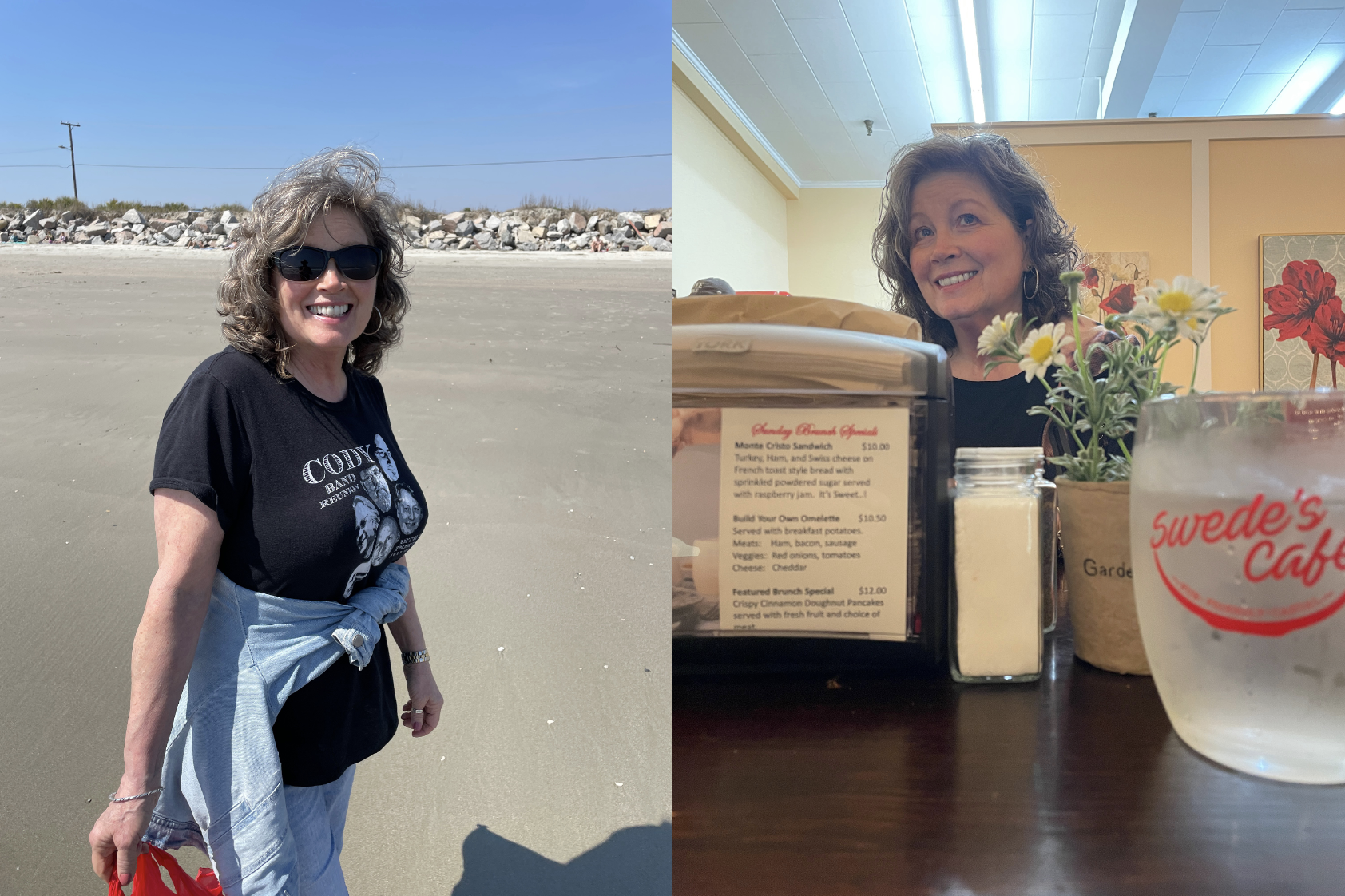
This year, I gave her what I gave her last year — tickets so see and hear Keb’ Mo’! (We saw him with Lane and Raleigh in Boone last year. This year the two of us saw him in Morganton.)
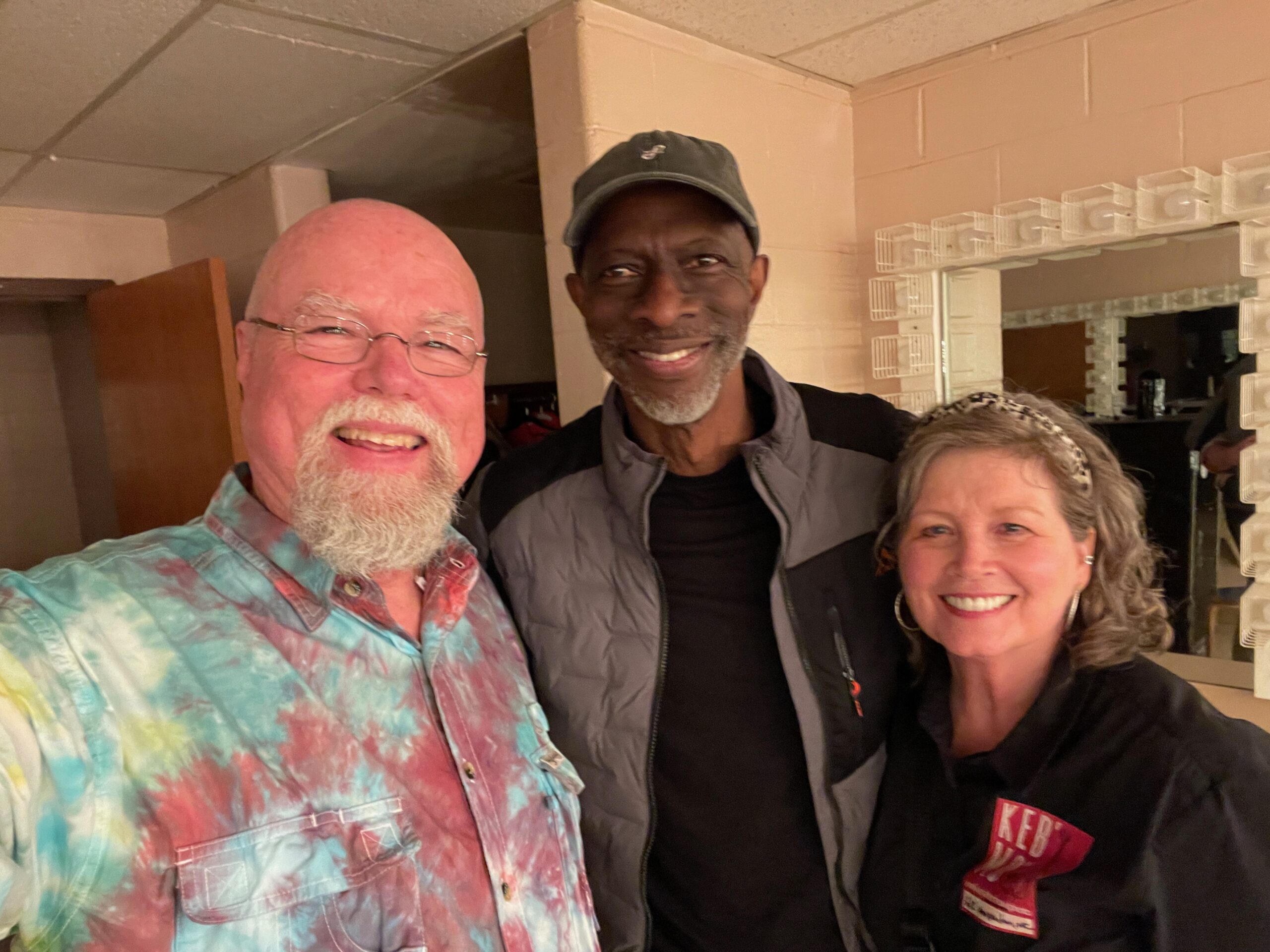
Kevin wished Leesa a happy birthday from the stage of CoMMA (City of Morganton Municipal Auditorium) and played a song she’d requested via text: Hand It Over. As Leesa said, “It brought the house down!”
He also ended the show — maybe the next to last song — with Leesa’s other favorite, a song that you could easily imagine he wrote about her: She Just Wants to Dance!
And here’s a little something in celebration of her from her other favorite singer/songwriter: Soulmates!

[Due to excessive commenting from Russian bots, I have stopped allowing comments on this blog. If you are not a Russian bot (or a bot of any other persuasion) and would like to comment, please email me at michaelamoscody@gmail.com.]
[Due to excessive commenting from Russian bots, I have stopped allowing comments on this blog. If you are not a Russian bot (or a bot of any other persuasion) and would like to comment, please email me at michaelamoscody@gmail.com.]

He is a man of
deep ignorance,
extravagant arrogance,
blatant immorality,
and no heartfelt convictions
(not counting those thirty-four, of course).
—
He is a man who cares nothing
about you or me,
about our lives in America,
or
about America itself.
—
He is a celebrity
(celebrated for being a rich ass)
and nothing more,
a third-rate stand-up comedian,
maybe fourth-rate.
—
He is the leader of a cult known as his “base”
(consider the adjectival meanings of base).
He has captured the devotion of that base
with a slogan (MAGA, catchy but meaningless),
a ridiculous little dance,
and lies as big or small as needed.
—
If you support the man
after his conviction on thirty-four felony counts,
after his attaches on women,
on immigrants (fleeing to the United States–
not to take your jobs
but to find, they hope, better lives),
on those with disabilities,
after he has attacked anybody or said anything
he thought might get him some masturbatory applause,
then I can’t help thinking that,
at some level,
you are like him.
[Due to excessive commenting from Russian bots, I have stopped allowing comments on this blog. If you are not a Russian bot (or a bot of any other persuasion) and would like to comment, please email me at michaelamoscody@gmail.com.]
I’ve lived in the United States of America for sixty-five years. I’ve been teaching American literature for the last twenty-seven of those.
My American lit surveys–particularly the sophomore-level general education version–begin with indigenous creation stories and trickster tales before moving to the letters of Cristoforo Colombo, i.e., Christopher Columbus. From there, it’s on to the writings of Bartolomé de Las Casas and the American Puritans (including those we typically style as “Pilgrims”). My students and I then read from the seventeenth, eighteenth, and early nineteenth centuries, usually winding up the semester with poets Walt Whitman and Emily Dickinson.
Having gone through some portion of these writings–in both undergraduate and graduate courses–every semester, I have come to believe that the one consistent American experience is that of decay, in all its not-so-varied noun and verb meanings:
The United States of America has decayed to the extent that it’s no longer even half of what it thinks itself to be. And if the USA is supposed to be–as it thinks it is–God’s gift to the world, it is now a cheap knock-off of the nation initially imagined, of the nation it might have been if it’d been able to live up to its own ideals and fend off the inevitable decay.
As Emily Dickinson wrote,
I reason, we could die–
–SECOND STANZA OF HER POEM 403
The best Vitality
Cannot excel Decay,
But, what of that?
A few years ago (never mind how many), Leesa and I drove to DC to spend a couple of days in the city and take in a Keb’ Mo’ concert while there. Leesa has developed a friendship with Kevin—we get to call him Kevin—over the years (and I’m part of it by proxy), so as is usual for us, we got to go backstage after the show to say hello. As we stood outside his dressing room, Kevin introduced us to his co-star for the evening, who was none other than Taj Mahal. But another less recognizable face was there that evening, and Kevin introduced us to him as well. (Leesa likes to say Kevin introduced us as if we were just as famous as anybody else, which is his generous nature.) That other face belonged to David Brooks, who is a conservative political and cultural commentator whose writing appears often in the New York Times.
Having met Mr. Brooks in that way, I tend to notice his writing when it crosses my field of vision. This past week I saw his name on the NYT Sunday Opinion page. His beautiful essay, which I hope you will read via the link, is titled “How to Stay Sane in Brutalizing Times.” The essay walks us through some “tragic” (in a good way) dispositions of sensibility and mentality, and Brooks summarizes his purpose like this:
I’m trying to describe a dual sensibility—becoming a person who learns humility and prudence from the Athenian tradition, but also audacity, emotional openness and care from the Jerusalem tradition.
His use of the adjective tragic doesn’t seem intended to relate exactly to its meaning in the catastrophes of ancient Greek dramatic tragedy, in which some great hero is ultimately destroyed—or at least brought low—by some fatal flaw such as pride. No, Brooks uses tragic in a less bombastic, less catastrophic sense. What he suggests here is that we look at the world and ourselves in realistic and humble ways, that we live prudently and not arrogantly, that we keep ourselves open to the good and the bad that will come our way and not close ourselves off as being above or beyond the reach of our need and that of others, of relationship, of our humanity in common with all.
One key idea Brooks offers is that our tendency to separate, our increasing tendency to rage, our tendency to dehumanize—desensitize us to the world in which we live. And in our desensitized state, we lose track of the wondrous beauty in nature and in each other. When we could be expanding, growing individually and communally, we are instead contracting into tight balls of rage, anger, and—the root of these—fear.
Such a state of being wadded up tight leaves us unable reach out to others, to feel with and for them, to feel sorry for ourselves for the right reasons such as the joy and fellowship and discovery we’re missing. This also is present in Brooks’s essay, probably nowhere more so than this paragraph:
. . . most people — maybe more than you think — are peace- and love-seeking creatures who are sometimes caught in bad situations. The most practical thing you can do, even in hard times, is to lead with curiosity, lead with respect, work hard to understand the people you might be taught to detest.
This passage, especially its phrase “lead with curiosity,” made me decide to focus this 3rd Saturday Song Story on “Sense of Wonder,” a song I wrote with Mark Chesshir sometime back in the late 1980s. I don’t remember the exact division of labor, but my guess is that Mark wrote most of the music while I wrote most of the words.
Here’s the first verse, sung over an appropriately B-minor chord progression:
A rose, unnoticed, blooms and dies to bloom again—
So many such gifts return to Sender unopened.
Calendar days fly off the wall in whirling wind,
And still the journal lays, blank pages from beginning to end.
Somewhere along my journey to becoming an English professor, I learned that the journal “lies” instead of “lays,” but setting that aside, I like the image of a natural world—embodied in the rose—full of amazing events that fail to amaze us because—busy and distracted—we pay so little attention. I also like the images of the flying calendar days I remember seeing in old TV shows and movies and the journal pages flipping through in the same whirlwind.
Next comes the second section of the first verse:
The treadmill world is small—
No place for standing tall—
Where the heart is a sleeping giant
To be feared and kept tied up.
I’m particularly fond of the image of the heart as like Gulliver among the Lilliputians. Do we fear our hearts and the acts of feeling, caring, and courage they are all capable of leading us into?
The chorus will grow as the song continues. This first chorus is short: “Racing the rain and chased by the thunder, / Hold on to a sense of wonder.” We threw in the “oh-way-oh” to mimic the moaning voices of those working through enslavement and imprisonment.
Here’s the two halves of the second verse:
The spark of childhood put away with childish things
Leaves the good life tasteless and in need of some leavening.
Look to the magic of youth—
The no-holds-barred search for truth.
The heart is a sleeping giant.
Take a chance and wake it up.
Do we take 1 Corinthians 13:11-12 a little too literally? A capacity for joy — a sense of wonder — enriches our lives no matter how old we become. Both positive and negative examples of this are all around us in the people we share family and community with.* One of the ways in which an energetic, youthful sense of wonder can be realized — perhaps the main way — is to “take a chance” and wake up our hearts, unbind them, and let them rise.
The second chorus is longer:
Oh-way-oh — racing the rain and chased by the thunder—
Oh-way-oh — walking the world and stalked by the hunger—
Oh-way-oh — senses dull from the attack they’re under—
Oh-way-oh — hold on to a sense of wonder.
I like these lines. Even more so than back yonder in the 1980s, our senses are constantly under attack, pummeled by media of all kinds and the excessive drama that all of it seems to wield in ever more dangerous ways. Our senses are drowning in information and misinformation “supposed to fire [our] imagination” when it in fact robs us of imagination, one of the main gifts that should be original in each of us.
And yet the rose continues its amazing cycle of life, which is the idea behind the song’s short bridge:
It is not for things to wonder at that we lack
In this catch-as-catch-can struggle with the hourglass.**
We must raise our gaze from our navels (or anybody else’s navel) and take in the world — move through the world — with a sense of wonder.
Sense of Wonder
A rose, unnoticed, blooms and dies to bloom again—
So many such gifts return to Sender unopened.
Calendar days fly off the wall in whirling wind,
And still the journal lays, blank pages from beginning to end.
The treadmill world is small—
No place for standing tall—
Where the heart is a sleeping giant
To be feared and kept tied up.
Oh-way-oh — racing the rain and chased by the thunder—
Oh-way-oh — hold on to a sense of wonder.
The spark of childhood put away with childish things
Leaves the good life tasteless and in need of some leavening.
Look to the magic of youth—
The no-holds-barred search for truth.
The heart is a sleeping giant.
Take a chance and wake it up.
Oh-way-oh — racing the rain and chased by the thunder—
Oh-way-oh — walking the world and stalked by the hunger—
Oh-way-oh — senses dull from the attack they’re under—
Oh-way-oh — hold on to a sense of wonder.
It is not for things to wonder at that we lack
In this catch-as-catch-can struggle with the hourglass.
[The Mark Chesshir lead guitar break!]
Oh-way-oh — racing the rain and chased by the thunder—
Oh-way-oh — walking the world and stalked by the hunger—
Oh-way-oh — senses dull from the attack they’re under—
Oh-way-oh — hold on to a sense of wonder.
*I read something recently that said the old grammatical rule of not ending a sentence with a preposition is on its way out, going the way of the injunction against the split infinitive. I’m giving it a try, but I’m not comfortable with either change.
**Here the phrase “catch-as-catch-can” joins with the second verse’s phrase “no-holds-barred” to reveal my long-held obsession with wrestling as the most apt metaphor for our relationships with the world, with each other, with our faith, with God.
[Much of what is below was originally posted on September 6, 2023, but kind of a lot has happened since then! So, here’s the year-end edition.]
I did a lot of writing in 2023.
In January, I signed up for an online class on writing grit lit led by writer Sheldon Lee Compton. Three of us worked with Sheldon for a couple of weeks (maybe more). In the process, we wrote four pieces of what turned out to be flash fiction, each with a different focus; on one, for example, we were to create the piece (narrative, character, etc.) using mostly dialogue.
I titled my dialogue piece “Abyssinian Night.” Mystery Tribune picked it up for its online daily fiction archive back in April or May, I think. You can read it here if you’re interested. The story had at least one reader! My X (not ex-) writer-friend Casey Stegman wrote this and linked the story: “Another story this year that I enjoyed the hell out of is this one from @DrMacOde (published by the always amazing @MysteryTribune).” Remember Casey’s name!
One of our other assignments for that workshop was particularly focused on setting. I wrote a piece I titled “Holy City Buskers,” which was accepted for online publication by The Dead Mule School of Southern Literature. The story went live there in early December. You can read it here if you’re interested.
I wrote two other pieces from Sheldon’s grit lit workshop – “Bell-Eye” and “Penny and the Beast.” I submitted both a couple of times to no success before deciding not to send them out anymore. Instead, I’ll keep them for myself and make them available here when this site is revised (hopefully in the first part of 2024).
In late August, I completed what I think was my first more-or-less traditional short story since the publication of A Twilight Reel. For the longest time it went untitled, and I referred to it as “Something Unspeakable,” a working title taken from what was – again for the longest time – its opening phrase: “Something unspeakable now lives in our woods. . . .” Eventually, as the character and voice of the story developed, I adopted the title “Payne Mountain,” for the place where the majority of the story is set, a mountain above Runion named after the family living there as the story begins. With help from writing friends Tonja Matney Reynolds, Pat Hudson, and Chris McGinley, I refined the voice and finally finished the story, now out on submission at a handful of places. Here’s the first paragraph as a bit of a teaser:
That evening, half a century ago now, just after supper when we had moved out to the veranda to worship the last light, something unspeakable asserted an ear-shattering claim on our fifty acres of forested mountainside. What we heard began as a forlorn howl, such as some creature might make if it returned to its den to find the place and its little ones destroyed, a howl that escalated into a scream of rage. Its echoes spread invisible fire through the woods and sent us scrambling for our front door, imaginations terrorized.
from “Payne Mountain” by Michael Amos Cody
I spent the last quarter of 2022 and most of 2023 in the “querying” stage. (For those who don’t know, “querying” is the hopeful, humbling, humiliating, hopeful again act of writing to literary agents and publishers/editors to ask if they are interested in representing/publishing my work. The vast majority of these queries either go unanswered or answered briefly with a note that might be summarized in four words: “not-interested-good-luck.” But that’s the way it is for 99.9% of us who engage in this writing business. (For an example of this process, you might want to check out the September 5 episode of Writer’s Bone podcast with National Book Award winner Tess Gunty.)
I completed the first draft of this new novel, Streets of Nashville, late in the summer of 2022, aided by a week-long residency in Laurel Cabin at Wildacres in the North Carolina mountains. In the excitement of new creation, I prematurely submitted the novel to a few agents and publishers who (rightly?) rejected it. Since then, through the semesters of Fall 2022 and Spring 2023 and on into the summer, I revised the novel a dozen times, guided by helpful comments from a few friends, particularly my colleague Michael Briggs.
Here are the two main paragraphs of the query letter:
It’s 1989, and Nashville feels like a city on the knife edge of uncertainty. Violent crime escalates, even on hallowed Music Row. The city’s streets fill with strangers. Its music industry faces the death of traditional practices as the digital age looms. The anxiety of change cracks the façades of “Music City, U.S.A.” and “Athens of the South,” revealing an unacknowledged darkness.
In the early hours of Easter Sunday morning, gunfire echoes along 17th Avenue South when four people are shot. Tenderfoot songwriter Ezra MacRae—out on the town to celebrate the first good fortune he has had with his songs—witnesses the shooting, but the masked gunman spares him. But why? While Nashville Metro PD’s investigation progresses, the killer develops an obsession with Ezra—calling him, following him, haunting his dreams, but not eliminating him. Ezra tries to carry on with his songwriting, maintain his day job cleaning pools, and assist in the investigation as he can. When the seemingly methodical mind behind the Easter killings begins to unravel, the violence—including the threat to Ezra—escalates in Nashville and moves toward a final confrontation in an isolated farmhouse near Ezra’s hometown of Runion, in the North Carolina mountains.
Major Update: Here’s a surprising saga of success rising out of failure. As mentioned above, in the excited flush of new creation, I submitted what amounted to a first or second draft of Streets of Nashville to a few agents and publishers. One of the latter was Madville Publishing.
I have signed the contract. The completed manuscript is due to Madville by July 1, 2024, and Streets will hit the streets in early 2025.
During the year as I was revising Streets of Nashville, I spent significant time drafting a new novel with the working title Avalon Moon. This first draft currently stands at roughly 77,000 words (271 pages in typescript), and I think that I’m 5,000 words or thereabouts from typing THE END (which I actually never do). Back in the spring of 2023, I submitted the first fifty pages to a competition called the Claymore Award, which is associated with Killer Nashville International Writers’ Conference. In July, I learned that Avalon Moon had been selected as a Finalist for the Claymore in the category of Southern Gothic (it’s actually more Appalachian Gothic). While my submission wasn’t the ultimate winner in that category, I consider its achievement of Finalist status to be affirmation of the novel’s potential

I started the ball rolling with an Asheville company called The Talking Book to record an audiobook of my first novel Gabriel’s Songbook. Time and quiet recording space have been hard to come by, but I hope I’ll be able to do some—if not all—of the recording by the end of January 2024.
Another new thing I’ve done here at the very end of the year is write a couple of short stories specifically for proposed anthologies. The first—completed and submitted by the end of October—was for possible inclusion in the Bouchercon 2024 anthology. The second—completed and submitted by the end of December—was for possible inclusion in an anthology based on the lyrics of Texas songwriter Robert Earl Keen. I really enjoyed writing these stories and have fingers and toes crossed for the success of each and both!